


The annual population estimates program of the U.S. Census Bureau produces population estimates every year for the United States, its states, counties, cities, and towns, as well as for Puerto Rico and its municipalities. In addition, demographic components of population change (births, deaths, and migration) are published at various geographic levels.

Employment, hour and wage statistics for all industries are provided monthly in the form of text, tables and graphs, comparing the current month with the previous month and with the same month of the previous year. Data is provided at the island level and the eight metropolitan areas.
Description
It presents statistical estimates of employment, unemployment and people outside the working group, in addition to other characteristics such as: gender, age, marital status, relationship with the head of household, education, type of employment, occupation and the duration of unemployment. Several of the tables in the publication show a comparison with the same previous period and/or with the same period last year.
Gateway: Puerto Rico Labor Market Information
Historical Series:
Employment and Unemployment (Historical Series 1947-1969)
Employment and Unemployment (Historical Series 1970-2010)
Employment and Unemployment (Feb-2006)
Employment and Unemployment (AN 2006)
Employment and Unemployment (FY 2006)
Employment and Unemployment (AN 2007)
Employment and Unemployment (Employment Projections 2000-2010)
Employment and Unemployment (AN 2013)
Employment and Unemployment (AN 2014)
Employment and Unemployment (Employment Projections 2014-16)

The Puerto Rico Violent Death Notification System (PRVDRS) is an epidemiological surveillance system designed to obtain a complete census of violent deaths in Puerto Rico. The PRVDRS, affiliated with the Puerto Rico Statistics Institute, began participating in the National Violent Death Reporting System (NVDRS) in September 2016. The PRVDRS collects, analyzes and publishes information on all violent deaths in Puerto Rico. Violent deaths occur by suicide or homicide, deaths from injuries with unintentional firearms, by legal intervention (except the death penalty), and deaths with undetermined intent. The documentation of violent deaths is carried out through a collaboration agreement with the Institute of Forensic Sciences, Puerto Rico Police Negotiate and the Demographic Registry (Vital Statistics) of the Department of Health.
Preliminary Data 2025
Editors:
Diego E. Zavala Zegarra, MSc, PhD
Mariluz Bezares Salinas, B.S., MS
Mario O. Font Martin, MP, MS, PPL
Cristian Perdomo, MSC
Dates:
Thursday, February 26, 2026
Documents:
2019 Annual Report
Editors:
Diego E. Zavala Zegarra, MSc, PhD
Mariluz Bezares Salinas, B.S., MS
Glorian Carrasquillo Sanchez, BA, MPH
Tania M. Martinez Sanchez, BS, MPH
Dates:
Thursday, November 03, 2022
Documents:
2018 Annual Report
Editors:
Diego E. Zavala Zegarra, MSc, PhD
Mariluz Bezares Salinas, B.S., MS
Glorian Carrasquillo Sanchez, BA, MPH
Tania M. Martinez Sanchez, BS, MPH
Dates:
Wednesday, December 01, 2021
Docs
2017 Annual Report
Editors:
Diego E. Zavala Zegarra, MSc, PhD
Myribel Santiago, MPH
Mariluz Bezares Salinas, B.S., MS
Glorian Carrasquillo Sanchez, BA, MPH
Tania M. Martinez Sanchez, BS, MPH
Dates:
Monday, August 24, 2020
Docs

It includes statistics on the number of suspected and confirmed cases of the dengue virus, chikungunya and Zika. It includes information on confirmed cases by municipality.
Puerto Rico employment and unemployment statistics, which come from the Worker Group Survey of the Department of Labor and Human Resources; and the Bureau of Labor Statistics' Current Employment Statistics. It includes the labor force, the unemployment rate, and wage employment by industrial sector.

It presents two price indices of repeated sales of single-family homes in Puerto Rico per quarter from 1995 to the present: Purchase only (only includes sales of properties whose values are estimated using the sale price, not an appraisal) and All transactions (includes property sales and refinancing of properties, whose values are estimated using sales prices in the case of a sale, and the appraised value in the case of a refinance). The following sources of information are used to prepare Puerto Rico's indices: Fannie Mae, Freddie Mac, Federal Housing Administration (FHA) and the Federal Home Loan Bank of New York (FHLBNY).

Several tables are presented with statistics on the number of cases diagnosed in Puerto Rico up to the reference date for cases of HIV only, for cases of AIDS only and for cases of HIV and AIDS. It includes breakdowns by age group, gender, diagnostic status, race, category of transmission, and by year of diagnosis. It not only presents statistics on the number of diagnosed cases, but also the number of deaths from this health condition. In addition, some maps are presented that show the distribution of cases by region of the Department of Health.
Using the methodology of Council for Community and Economic Research (hereinafter, C2ER), a non-profit professional organization dedicated to research on community and economic development, the Institute of Statistics is responsible for collecting the prices of goods and services within the categories of supermarket, housing, transportation, public services and miscellaneous items. The data is sent to C2ER, who calculate the average prices and indices for each of the categories, allowing the comparison of costs with the equivalent cost in the United States. Finally, the Cost of Living Index (COLI) is calculated, which the C2ER has been preparing since 1968 for more than 300 urban areas in the United States and which Puerto Rico joined in the second quarter of 2014. The prices are published for users through a cost of living calculator, which makes it possible to compare the cost of living in Puerto Rico versus that of another city in the United States and vice versa. The Puerto Rico Cost of Living Index includes average prices three times a year for the following 56 product categories: ribeye steak, ground beef, sausage, fried chicken, canned tuna, whole milk, eggs, margarine, parmesan cheese, potatoes, guineos, lettuce, specialty bread, china juice, coffee, sugar, corn flake cereal, green peas, peaches, face towels, dishwashing detergent, extra virgin olive oil, frozen food, fresh corn, frozen whole corn, potatoes soft drinks, apartment rental, house price, energy total, landline, tire balancing, gasoline, visit to an optometrist, visit to a doctor, dental cleaning, ibuprofen, Lantus insulin, hamburger, pizza, fried chicken, men's cut, hair care for women (washing, drying and trimming), toothpaste, hair shampoo, dry cleaning for men's label, men's shirt, pants for boys, pants for women, washing machine, subscription to newspapers, movies, bowling, tennis balls, veterinary services, beer and wine.
Presenta los resultados de esta encuesta escolar. Muestra las tendencias temporales en el uso de substancias entre los jóvenes, y sus factores de riesgo y protección.
.png)
.png)
.png)
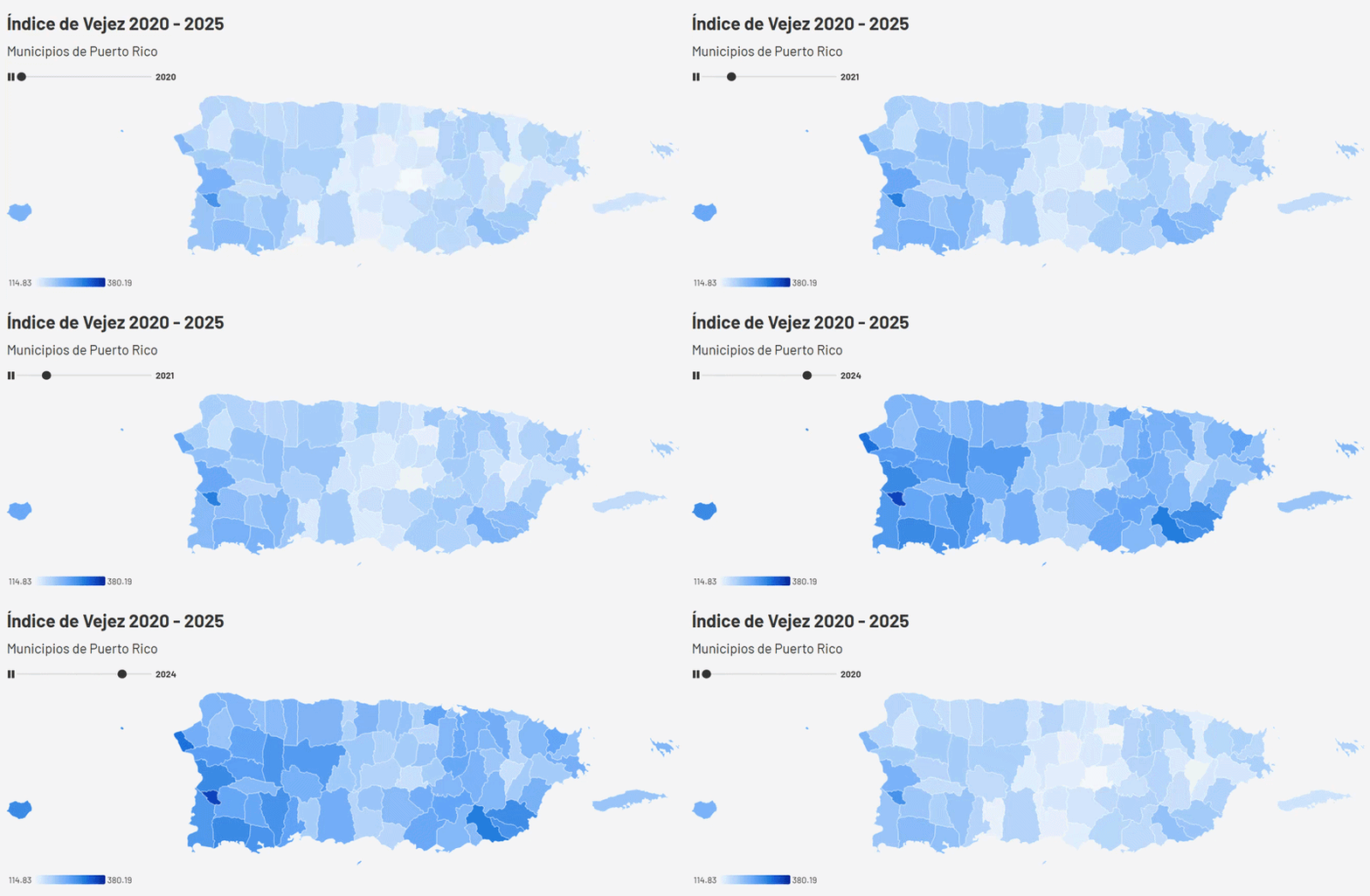

In 2020, the Puerto Rico Aging Index was estimated in 168, meaning there were approximately 168 people aged 65 or older for every 100 people under 15. By 2025, the indicator rose to 237, reflecting that for every 100 people under 15, there were nearly 237 older adults. Learn about the geographical distribution of municipalities for this index on the Institutes' Census Data and Information page (SDC-PR).
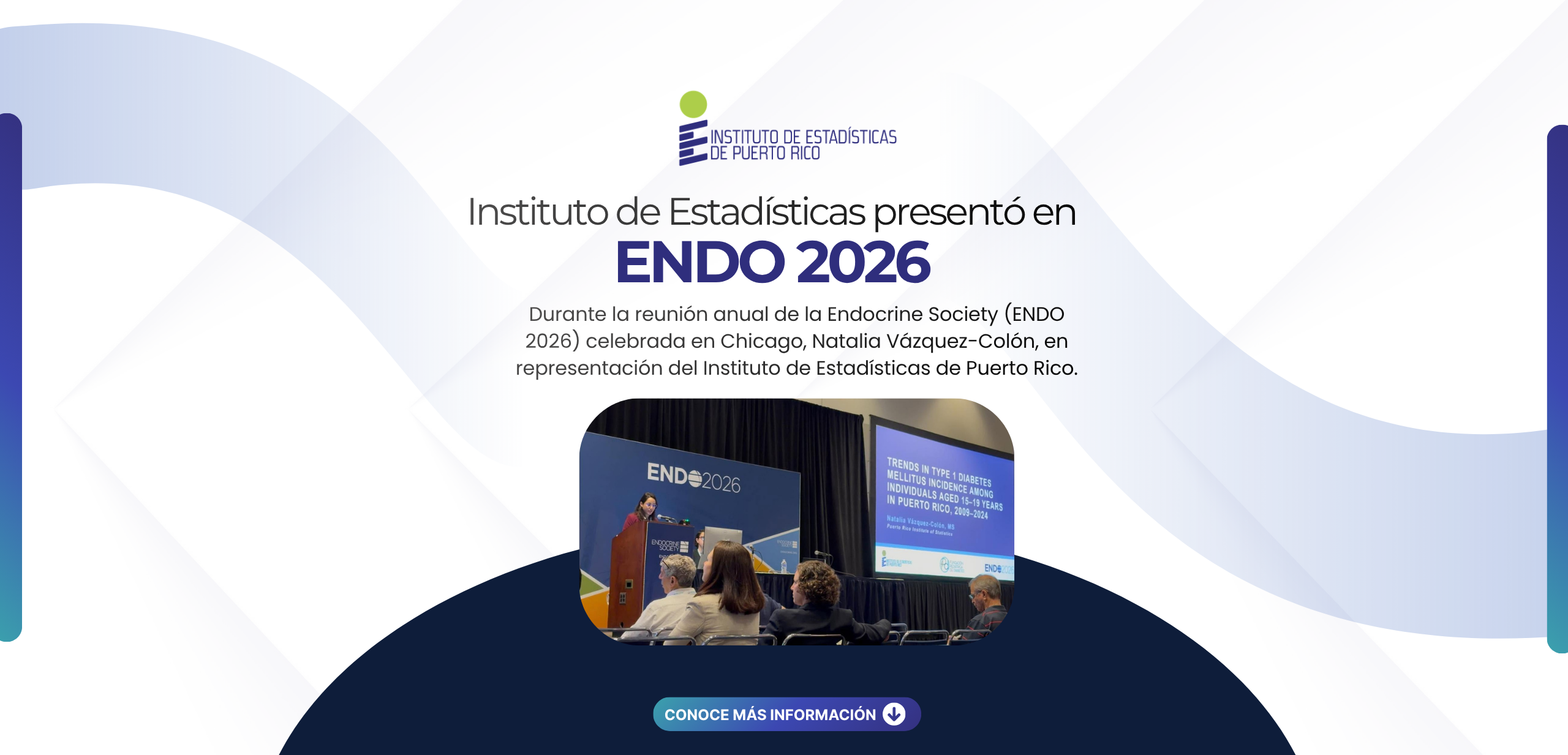
During the annual meeting of the Endocrine Society (ENDO 2026) held in Chicago, Natalia Vázquez-Colón, representing the Puerto Rico Institute of Statistics, presented original research on the incidence of type 1 diabetes in adolescents aged 15 to 19 in Puerto Rico.
The results showed an upward trend in incidence during the 2009–2024 period. The analysis identified a significant average annual growth of 4.1%.
The research was conducted through a collaboration between the Institute of Statistics and the Pediatric Diabetes Foundation. Participation in ENDO 2026 allowed for sharing scientific evidence generated in Puerto Rico with a highly prestigious national and international audience of researchers, academics, and clinicians.
Access a copy of the presentation at: Trends in Type 1 Diabetes Mellitus Among Individuals Aged 15-19 Years in Puerto Rico.
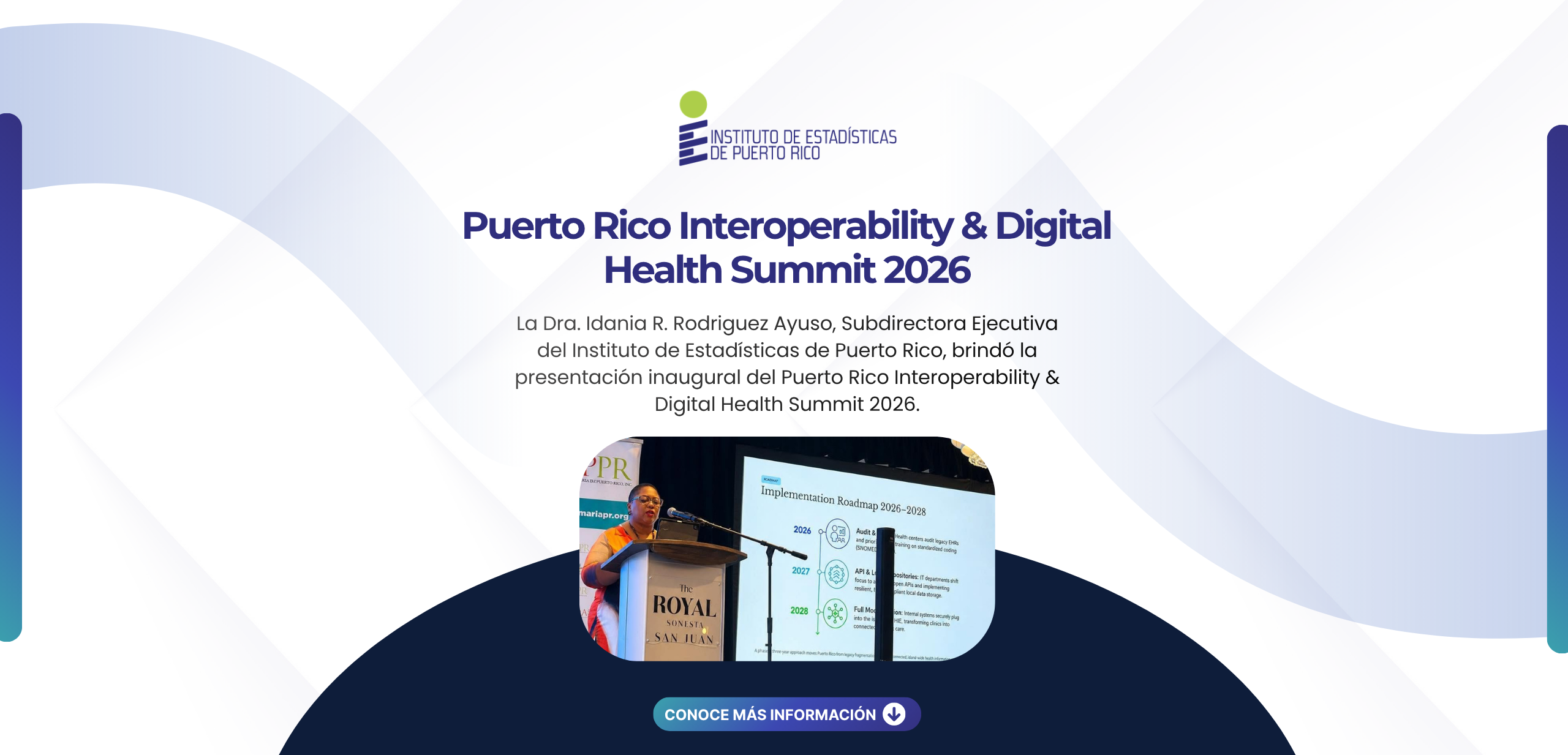
Dr. Idania R. Rodriguez Ayuso, Executive Deputy Director of the Puerto Rico Institute of Statistics, delivered the inaugural presentation at the Puerto Rico Interoperability & Digital Health Summit 2026.
This important event was organized by the Puerto Rico Primary Healthcare Association. Dr. Rodriguez presented on "Building a Data Driven Health System for Puerto Rico."
The event was attended by staff from Puerto Rico's 330 Centers, the U.S. Virgin Islands, and federal government personnel.

Some variables are easier to measure than others, but certain questions require special care, both in how they are formulated and in the instruments are used to collect them. One of the most complex is without a doubt, that related to people's ethnic and cultural origin, and also the skin color. In the most recent newsletter of the Puerto Rico State Data Center (SDC-PR) network brief notes are shared about the research on ethnic-racial identification and colorism that has been carried out from the Institute's. Access the current newsletter here, or explore previous newsletters and press releases from the SDC-PR network.
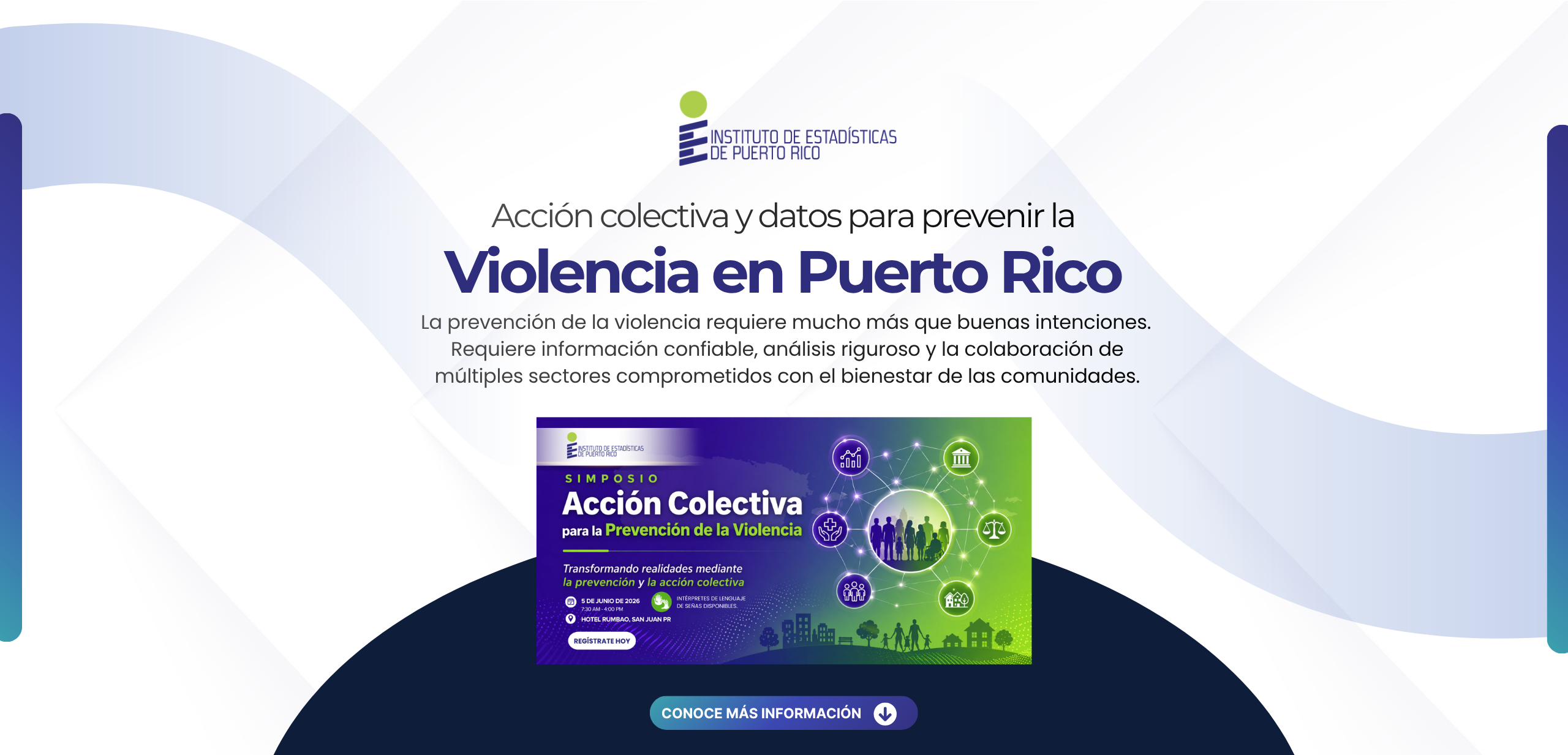
Symposium 2026
On June 5, 2026, the Puerto Rico Institute of Statistics hosted the Collective Action for Violence Prevention Symposium: Transforming Realities through Prevention and Collective Action. This event brought together professionals, public officials, organizations, and citizens interested in strengthening violence prevention efforts in Puerto Rico. The program addressed topics such as the current landscape of violence affecting infants and youth, public policy and substance use prevention, and multisectoral action for the protection of women and the eradication of sexual violence, among others. The presentations offered evidence-based analyses and multidisciplinary perspectives that contributed to the development of initiatives aimed at preventing violence, promoting safer environments, and improving the well-being of the population.
The Initiative
The purpose of the Collective Action for Violence Prevention symposium was to bring together professionals from various sectors to analyze, from an evidence-based perspective, the key challenges and strategies for preventing violence in Puerto Rico. This multisectoral initiative fostered a space for dialogue and action where organizations such as the Puerto Rico Institute of Statistics, the Department of Health, the Puerto Rico Police, and Iniciativa Comunitaria shared updated data on youth violence, substance use prevention policies, and the protection of women. In addition to strengthening institutional collaboration, the event offered formal training to attendees by granting hours in governmental ethics, integrating statistical rigor with social commitment to promote the safety and well-being of the population.
Special Guest Presentations
• • Mr. Alejandro Rodríguez-Putnam, Preventing Violent Firearm Deaths
• Dr. Glenda Dávila- Torres, Brega Bien Program: Risk Context
• Dr. Eduardo J. Zavala-Mendoza, Characterization of Emergency Room Visits and Hospitalizations for Overdose in Puerto Rico
• Ms. Keysha M. Maldonado Avilés, Data That Saves Lives
• Capt. Aymée M. Alvarado Cardona and Ms. Myribel H. Santiago, Sexual Assault within Domestic Violence
• Ms. Soé Rodríguez Alamo, Data for Action: Use of Tracking Systems, Hospital Audits, and Risk Assessment in Gender-Based Violence Prevention in Puerto Rico
• Ms. Edda Rocca López, Las Amigas
Puerto Rico Institute of Statistics
• Mr. Alberto L. Velázquez Estrada, Violent Deaths in Young Adults
• Dr. Diego E. Zavala, Typology of Violence Regional Context
• Dr. Francisco Pesante González, Child Maltreatment, Risk Behaviors, and Parenting Practices in Puerto Rico: A Statistical Overview
• Dr. Idania R. Rodríguez Ayuso, Sexual Coercion in Domestic Violence
Materials
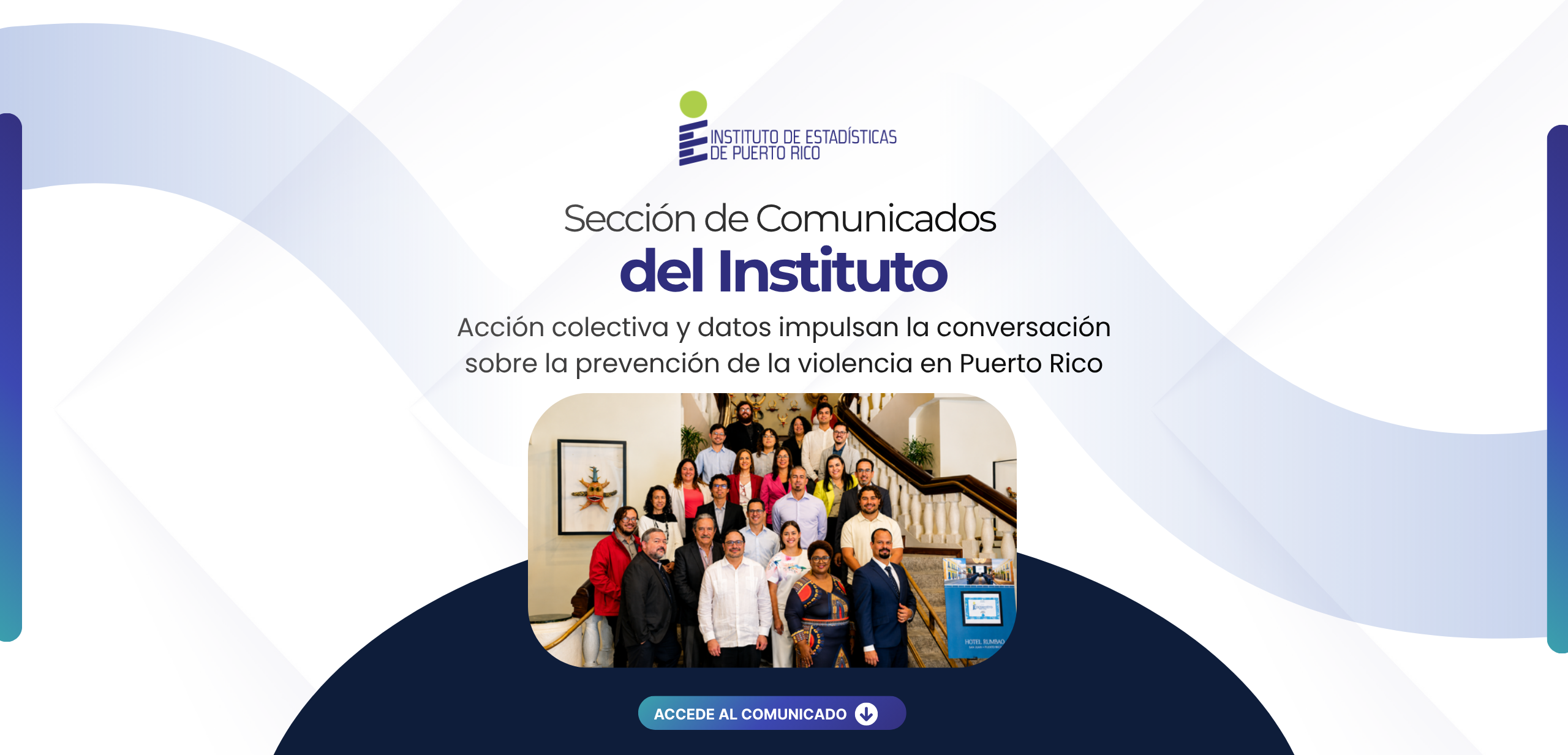
Experts analyzed statistics showing over 30 million controlled substance dispensations to nearly 2 million unique patients in Puerto Rico since 2019
The Puerto Rico Institute of Statistics hosted the symposium "Collective Action for Violence Prevention: Transforming Realities Through Prevention and Collective Action," a gathering that brought together researchers, public health professionals, justice system representatives, community organizations, and government officials to analyze trends, risk factors, and strategies aimed at preventing violence in Puerto Rico.
During the event, presentations and panels were held, including "Current Landscape of Violence Among Infants and Youth: Data and Trends," "Public Policy and Substance Use Prevention: Where Are We and Where Are We Going?," and "Multi-sectoral Action for the Protection of Women and the Eradication of Sexual Violence," all of which addressed various factors contributing to violence and opportunities for its prevention through multi-sector collaboration.
Among the data presented during the symposium, it was highlighted that since 2019, over 30 million controlled substance dispensations have been recorded for nearly 2 million unique patients in Puerto Rico. Participants also discussed statistics related to homicides, gun violence, domestic violence, sexual assault, and substance use prevention, as well as early intervention strategies and community action.
In the panel on substance use prevention, it was highlighted that benzodiazepines currently account for 66.2% of controlled substance dispensations in Puerto Rico, while opioids make up 15.9%. Furthermore, the recorded growth in prescribed fentanyl dispensations was discussed, as well as the role of the Controlled Substance Monitoring Program (PDMP) as a tool to promote responsible prescribing, strengthen prevention, and support informed decision-making in the healthcare system.
Presentations on violence among infants and youth revealed that between 2017 and 2024, 4,813 homicides were reported in Puerto Rico, and 92.3% of the victims were men. Experts also highlighted that firearm homicides are the leading cause of death among youth aged 1 to 19 in Puerto Rico. It was also reported that 54% of homicides among men aged 15 to 44 are related to manifestations of collective violence, including organized crime and drug trafficking.
Meanwhile, the panel on the protection of women and the eradication of sexual violence presented statistics showing that during 2024 and 2025, the Puerto Rico Police investigated 17,695 incidents of domestic violence. Furthermore, it was highlighted that, according to the Risk Assessment Form, one in four female complainants evaluated during the second half of 2024 faced an imminent risk of death, and nearly one in five had survived a non-fatal strangulation episode, one of the main indicators associated with the risk of femicide.
Participating experts agreed that many manifestations of violence are rooted in adverse childhood experiences, including abuse, emotional neglect, and early exposure to trauma. They also emphasized the importance of strengthening early interventions, mentorship, community programs, and coordination among health, education, security, and justice systems to address the causes of violence before it occurs.
"This symposium reaffirms the importance of using data to better understand the challenges we face as a society and to guide concrete prevention actions. Violence cannot be addressed by a single sector. It requires collaboration, evidence, and the commitment of multiple stakeholders to identify its causes, intervene promptly, and protect our communities," said Dr. Orville M. Disdier, Executive Director of the Puerto Rico Institute of Statistics.

The current situation presents an opportunity to strengthen production in Puerto Rico and increase its presence in the U.S. market through reshoring strategies.
The Puerto Rico Institute of Statistics presented estimates related to the scope of the tariff burden in Puerto Rico. The data shows that the amount of tariffs on imports increased by 288.66% between 2024 and 2025. In 2024, the total amount of tariffs was $236,641,688, while in 2025 it increased to $919,734,046.
Between 2010 and 2025, the year 2025 showed the highest amount in tariffs. These amounted to $919,734,046, representing an increase of $683,092,358 compared to 2024, equivalent to a year-over-year increase of 288.66%.
On the other hand, an analysis of the effective tariff rate provided a clearer view of the impact of tariffs by directly relating the amount of tariffs in U.S. dollars (USD) to the total value of imports in USD. In 2025, the effective tariff rate was 4.81%, representing an increase of 3.64 percentage points compared to 2024.
The impact of tariff regulations in 2025 can be observed in the monthly behavior of tariffs collected that year. These show a marked increase starting in April, reaching levels above $100 million in several months, while imports remained relatively stable. This imbalance between both variables directly translates into the observed increase in the effective tariff rate throughout 2025.
Effective from April 2025, increases in tariff rates were observed, which aligns with the tariff policies applied in the same month. During the second half of the year, significant increases were recorded, with November being the month with the highest effective tariff rate (7.61%) during 2025.
The full study can be accessed at: Tariffs in Puerto Rico 2025.
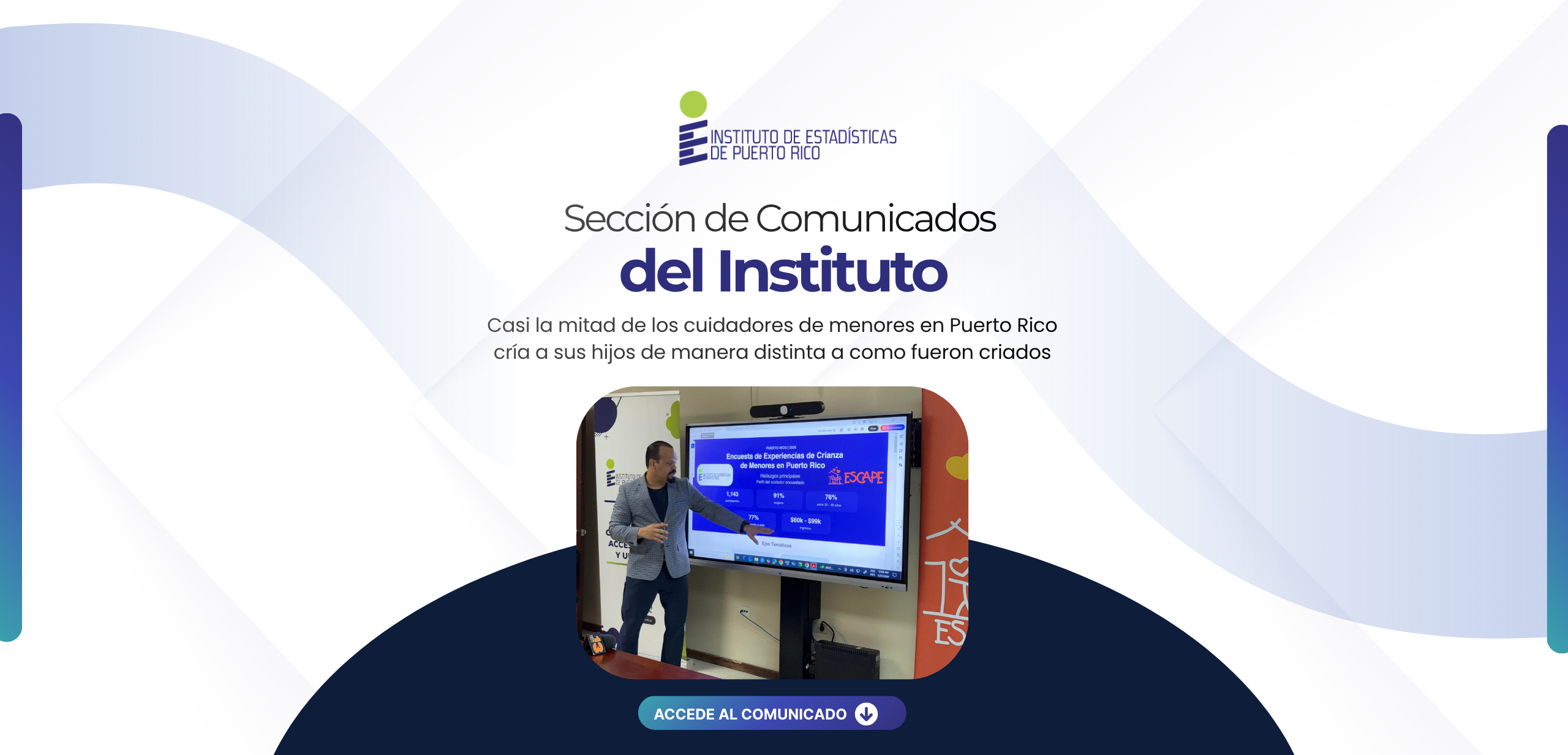
Parenting Experiences Survey Reveals Generational Shifts in Discipline, Communication, and Family Priorities
The Survey of Child Rearing Experiences in Puerto Rico revealed, among other data, that 48.6% of surveyed caregivers use disciplinary styles different from those they experienced with their own parents, reflecting a possible generational shift in parenting practices and in how Puerto Rican families approach the upbringing, communication, and well-being of children.
The study, developed through an alliance between ESCAPE, the Family Strengthening Center, and the Puerto Rico Institute of Statistics, collected the experiences, challenges, and needs of 1,143 voluntary participants via a self-administered online questionnaire conducted between February and June 2025. The survey was descriptive in nature and explored topics related to parenting experiences, discipline and communication, technology and quality time, as well as support needs and expectations for children's futures.
Among the most relevant findings of the survey are:
• More than two-thirds of respondents stated that parenting is more difficult or much more difficult than they expected.
• The main challenge identified was achieving a work-life balance (62.3%).
• 44.3% cited lack of personal time and rest as one of their biggest challenges.
• 41.6% expressed a need for tools to manage stress and their own mental health.
• 57.2% reported arguments related to the use of technological devices at home.
• 4% identified the use of physical aggression as a disciplinary strategy.
• 94% of participants indicated that they praise their children's achievements "almost always" or "always."
• Most participants defined discipline as a formative tool for teaching values and setting clear boundaries.
The survey also reflected that caregivers prioritize the development of self-esteem and self-confidence, responsible decision-making, and healthy emotional management for children's futures.
"The information collected allows us to better understand how family dynamics are changing and what real challenges are faced by those responsible for raising children in Puerto Rico. This data is fundamental for developing more effective public policies, programs, and interventions tailored to the current needs of Puerto Rican families," stated Dr. Orville M. Disdier Flores, Executive Director of the Puerto Rico Institute of Statistics.
Meanwhile, Yadira Pizarro Quiles, Executive Director of ESCAPE, highlighted that the results provide an important X-ray of families' emotional and structural needs. "This survey confirms the importance of continuing to strengthen families through prevention. Understanding how mothers, fathers, and caregivers are experiencing parenting allows us to better direct our efforts, develop support tools, and promote strategies that strengthen children's well-being and help prevent child abuse in Puerto Rico."
As part of the strategic recommendations derived from the study, it is proposed to strengthen emotional support initiatives for caregivers, promote flexible work policies, drive digital literacy campaigns at home, and expand preventive education efforts on parenting and those related to child well-being and protection.
The Survey of Child Rearing Experiences in Puerto Rico is available at the following link: www.estadisticas.pr.gov/productos/encuesta-de-experiencias-de-crianza-de-menores-en-puerto-rico-2025.
To amend Articles 3 and 4 of Act No. 3 of March 13, 1942, as amended, known as the "Working Mothers Protection Act," for the purpose of extending the maternity leave period for private sector employees from eight (8) to twelve (12) weeks, generally distributed as six (6) weeks of prenatal leave and six (6) weeks of postnatal leave, with the possibility of prenatal/postnatal redistribution subject to medical certification; to reaffirm the full payment of the employee's salary during said period; to extend these benefits, equally, to adoptive mothers; and for other related purposes.
To direct the Department of Health to conduct, in collaboration with the Puerto Rico Institute of Statistics and the Graduate School of Public Health of the Medical Sciences Campus of the University of Puerto Rico, a prevalence study to determine the statistical incidence of autism spectrum disorders in Puerto Rico.

.png)
.png)
.png)
.png)



.svg)