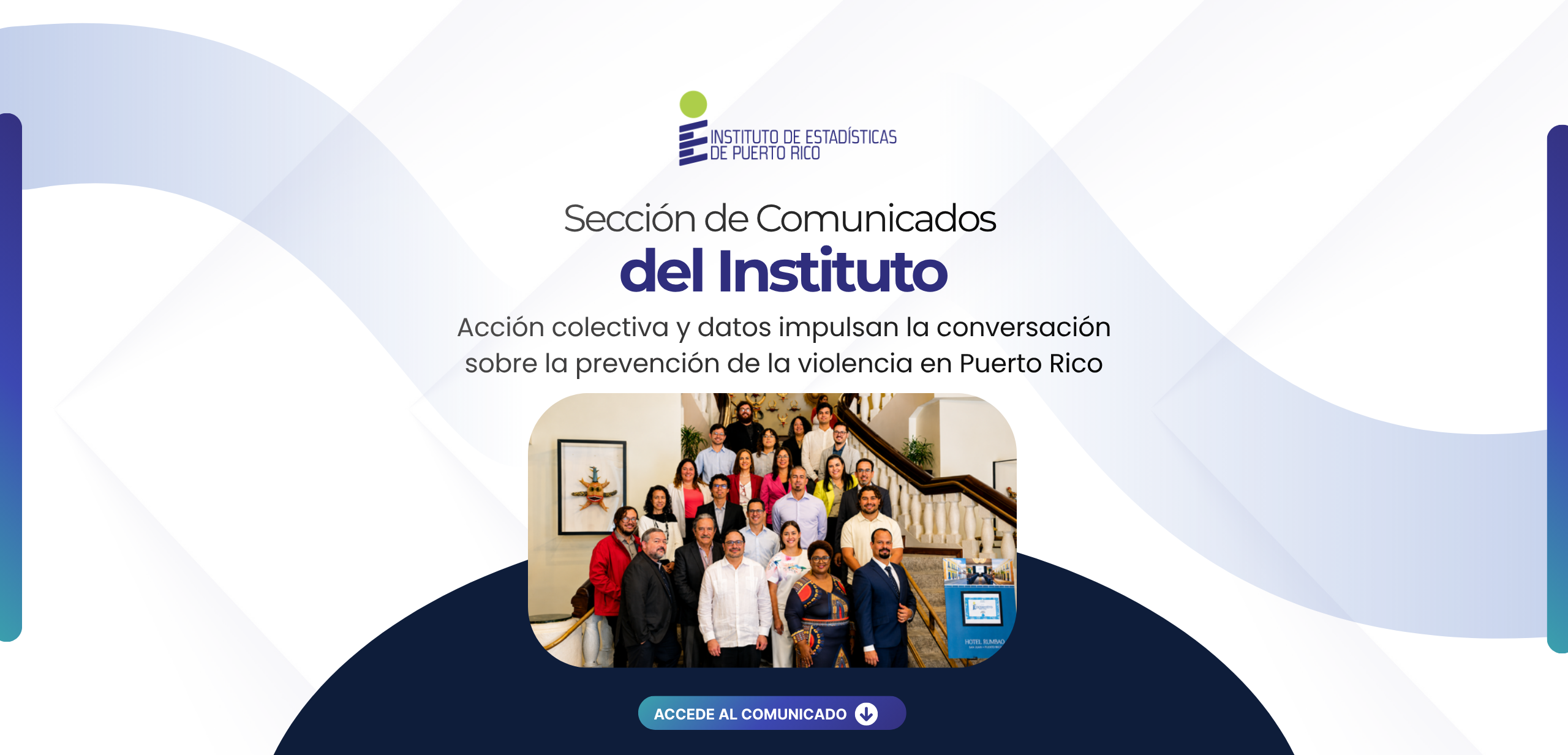

Collective action and data drive the conversation about violence prevention in Puerto Rico
Experts analyzed statistics showing over 30 million controlled substance dispensations to nearly 2 million unique patients in Puerto Rico since 2019
The Puerto Rico Institute of Statistics hosted the symposium "Collective Action for Violence Prevention: Transforming Realities Through Prevention and Collective Action," a gathering that brought together researchers, public health professionals, justice system representatives, community organizations, and government officials to analyze trends, risk factors, and strategies aimed at preventing violence in Puerto Rico.
During the event, presentations and panels were held, including "Current Landscape of Violence Among Infants and Youth: Data and Trends," "Public Policy and Substance Use Prevention: Where Are We and Where Are We Going?," and "Multi-sectoral Action for the Protection of Women and the Eradication of Sexual Violence," all of which addressed various factors contributing to violence and opportunities for its prevention through multi-sector collaboration.
Among the data presented during the symposium, it was highlighted that since 2019, over 30 million controlled substance dispensations have been recorded for nearly 2 million unique patients in Puerto Rico. Participants also discussed statistics related to homicides, gun violence, domestic violence, sexual assault, and substance use prevention, as well as early intervention strategies and community action.
In the panel on substance use prevention, it was highlighted that benzodiazepines currently account for 66.2% of controlled substance dispensations in Puerto Rico, while opioids make up 15.9%. Furthermore, the recorded growth in prescribed fentanyl dispensations was discussed, as well as the role of the Controlled Substance Monitoring Program (PDMP) as a tool to promote responsible prescribing, strengthen prevention, and support informed decision-making in the healthcare system.
Presentations on violence among infants and youth revealed that between 2017 and 2024, 4,813 homicides were reported in Puerto Rico, and 92.3% of the victims were men. Experts also highlighted that firearm homicides are the leading cause of death among youth aged 1 to 19 in Puerto Rico. It was also reported that 54% of homicides among men aged 15 to 44 are related to manifestations of collective violence, including organized crime and drug trafficking.
Meanwhile, the panel on the protection of women and the eradication of sexual violence presented statistics showing that during 2024 and 2025, the Puerto Rico Police investigated 17,695 incidents of domestic violence. Furthermore, it was highlighted that, according to the Risk Assessment Form, one in four female complainants evaluated during the second half of 2024 faced an imminent risk of death, and nearly one in five had survived a non-fatal strangulation episode, one of the main indicators associated with the risk of femicide.
Participating experts agreed that many manifestations of violence are rooted in adverse childhood experiences, including abuse, emotional neglect, and early exposure to trauma. They also emphasized the importance of strengthening early interventions, mentorship, community programs, and coordination among health, education, security, and justice systems to address the causes of violence before it occurs.
"This symposium reaffirms the importance of using data to better understand the challenges we face as a society and to guide concrete prevention actions. Violence cannot be addressed by a single sector. It requires collaboration, evidence, and the commitment of multiple stakeholders to identify its causes, intervene promptly, and protect our communities," said Dr. Orville M. Disdier, Executive Director of the Puerto Rico Institute of Statistics.
-p-130x130q80.png)
.png)
.png)
.png)
.png)
.png)
.png)
.png)
.png)
.png)
.png)
.png)


.png)
.png)
.png)
.png)