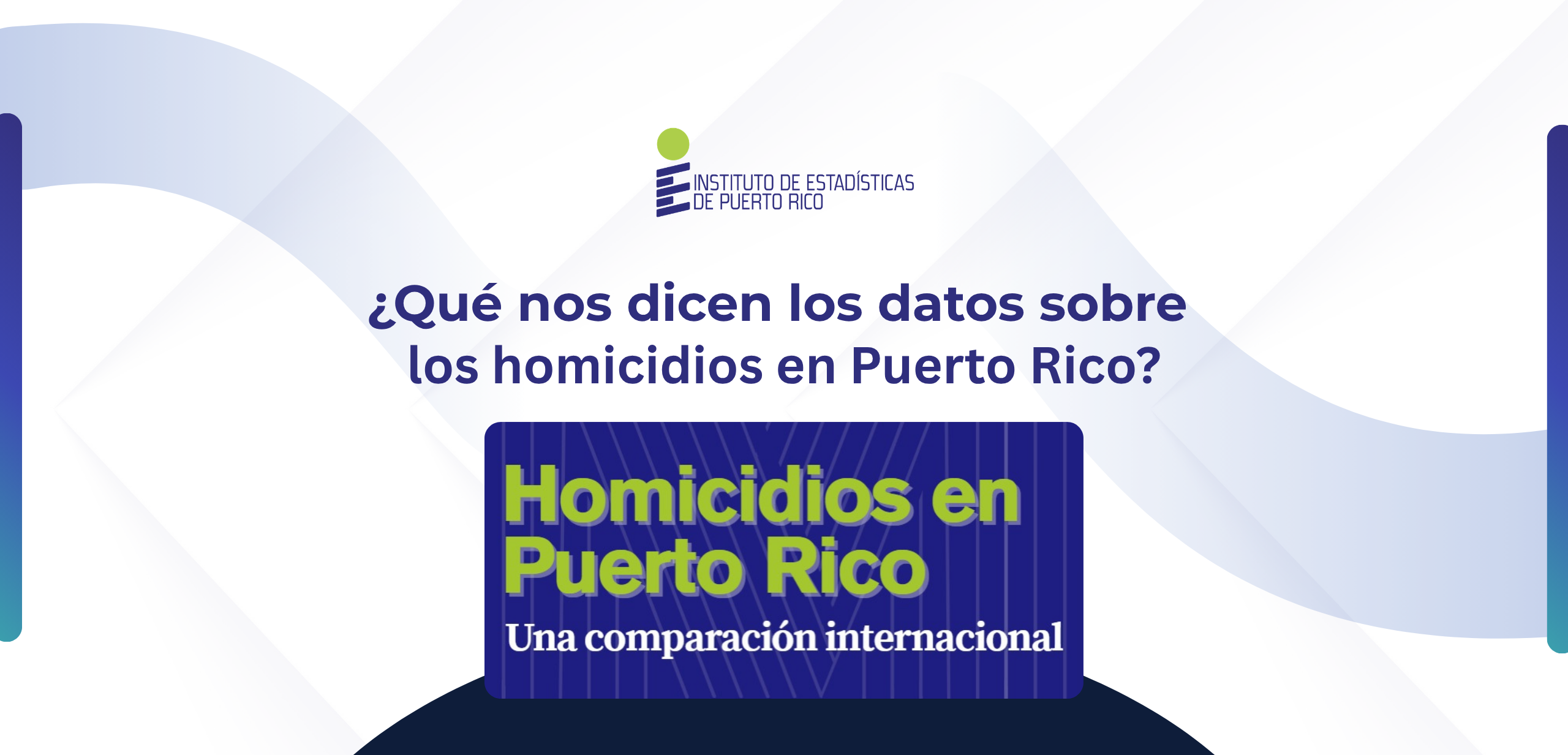

Key Homicide Data in Puerto Rico: An Analysis in the International Context
The Puerto Rico Violent Death Reporting System (PRVDRS), attached to the Puerto Rico Institute of Statistics, has published a new information capsule with 2024 data analyzing the archipelago's situation compared to the rest of the world.
Below, we highlight the most relevant findings regarding the incidence of homicides in Puerto Rico and worldwide:
Puerto Rico's Position in the Region
- Homicide Rate: Puerto Rico recorded a crude rate of 15.2 homicides per 100,000 inhabitants.
- Caribbean Ranking: Among the 11 countries and jurisdictions analyzed in the Caribbean region, Puerto Rico ranks 10th, placing below jurisdictions such as the Turks and Caicos Islands (103.2), Haiti (64.3), Trinidad and Tobago (41.5), and Jamaica (40.4).
- Compared to the Regional Average: Although Puerto Rico's figure (15.2) sits below the Latin America and Caribbean average (19.3), it remains nearly three times higher than the global homicide average (5.1 per 100,000 inhabitants).
Firearm Prevalence: Puerto Rico – The Second Highest Figure in the Region
- 89.2% of Homicides Involve Firearms: Nearly 9 out of 10 homicides in the archipelago are committed using a firearm.
- Regional Leader: Alongside Saint Kitts and Nevis (89.3%), Puerto Rico presented the highest proportion of firearm homicides in all of Latin America and the Caribbean.
- International Contrast: This figure far exceeds the global average for firearm homicides (67.2%). The document emphasizes that a large portion of these incidents in Puerto Rico is related to organized crime.
Comparison by Gender and Racial Groups (Puerto Rico vs. United States)
When adjusting rates by age and comparing Puerto Rico's population with various groups in the U.S., significant disparities by sex are observed:
- Men: Men in Puerto Rico present the second-highest homicide risk rate (32.5 per 100,000 inhabitants), surpassed only by Black men in the U.S. (41.5). This figure is considerably higher than that of Hispanic men (8.6) and White men (3.6) in the U.S.
- Women: The adjusted rate for women in Puerto Rico is 3.9 per 100,000 inhabitants, placing below the risk level observed in Black women (6.9) and Native American women (5.9) in the U.S.
For more information, download the information capsule in the Access the Document section.
About the Data Source
The PRVDRS was established in 2016 with support from the Centers for Disease Control and Prevention (CDC). The system consolidates and validates information from the Bureau of Forensic Sciences, the Puerto Rico Police, and the Demographic Registry of the Department of Health to generate rigorous and internationally comparable statistics.
Links of interest: Puerto Rico Violent Death Reporting System
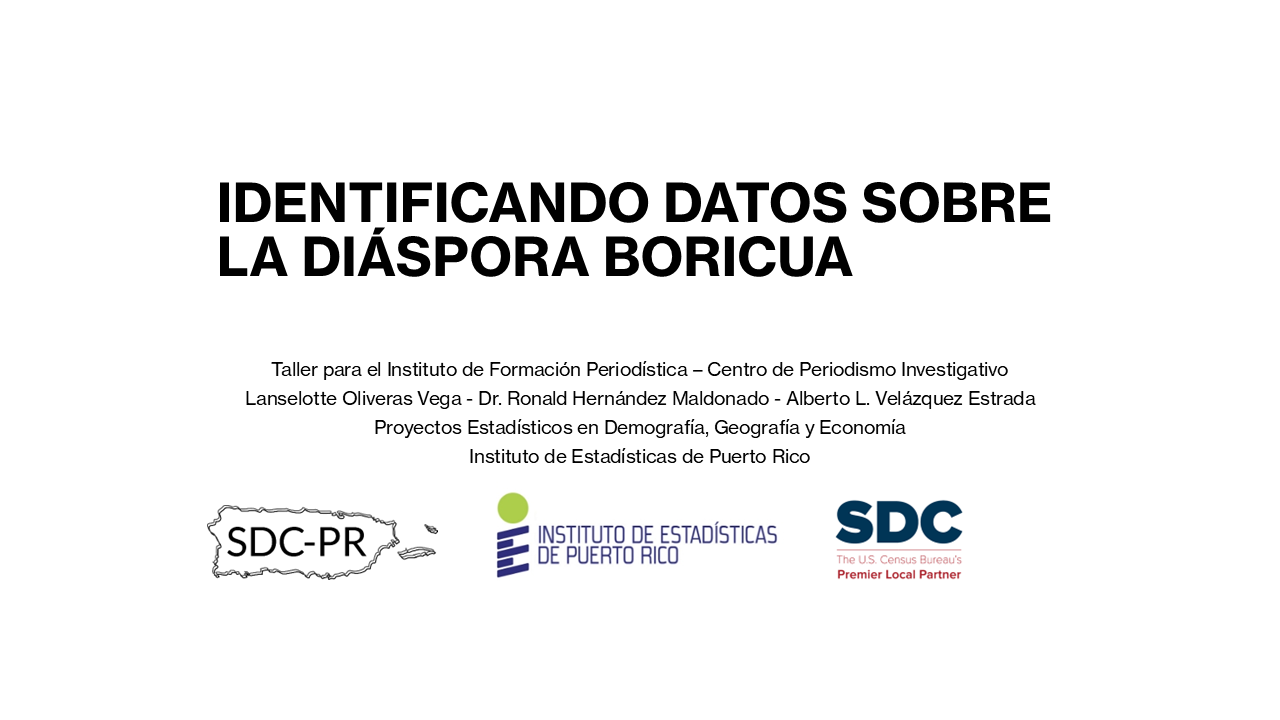
On Friday, August 7, staff from the Institute of Statistics held a workshop as part of the Centro de Periodismo Investigativo professional training series. Focusing on how to identify data related to the Puerto Rican diaspora, Dr. Ronald Hernández Maldonado, Lanselotte Oliveras Vega and Alberto L. Velázquez Estrada shared information on available sources and tools. Specifically, the session covered topics such as census data sources and their differences, community vulnerability estimates, custom tabulations using the U.S. Census Bureau's MDAT tool, and the cost-of-living index and its calculator for metropolitan areas in Puerto Rico and the United States.
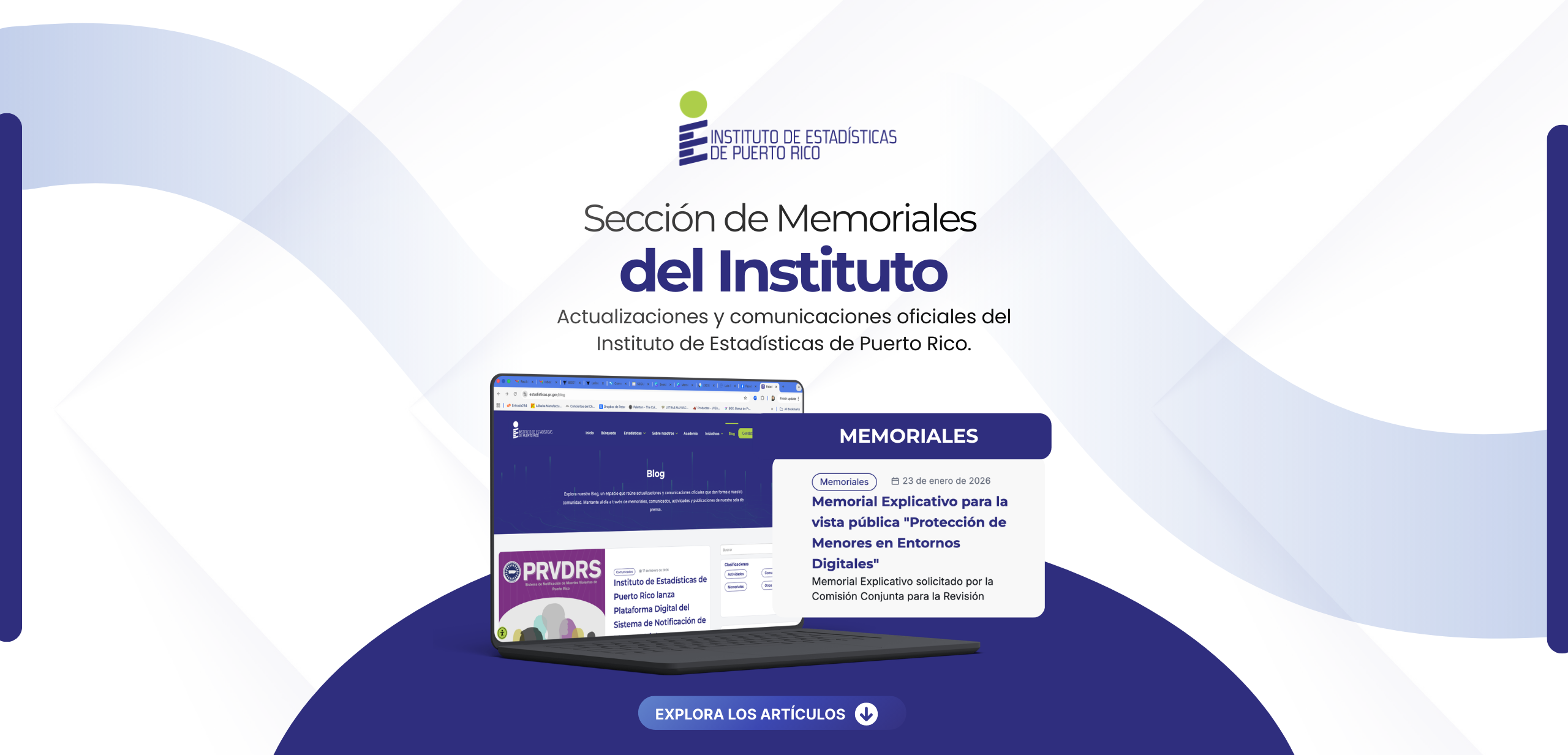
To create the "Act on the Ethical Use of Artificial Intelligence in Educational Institutions of Puerto Rico"; to require the Puerto Rico Department of Education, as well as all private educational institutions, to establish policies incorporating ethical standards for the use of artificial intelligence; and for other related purposes.
To order the Puerto Rico Secretary of Education, Eliezer Ramos Parés, to conduct a feasibility study to determine the possibility of establishing a specialized sports school in District 20.
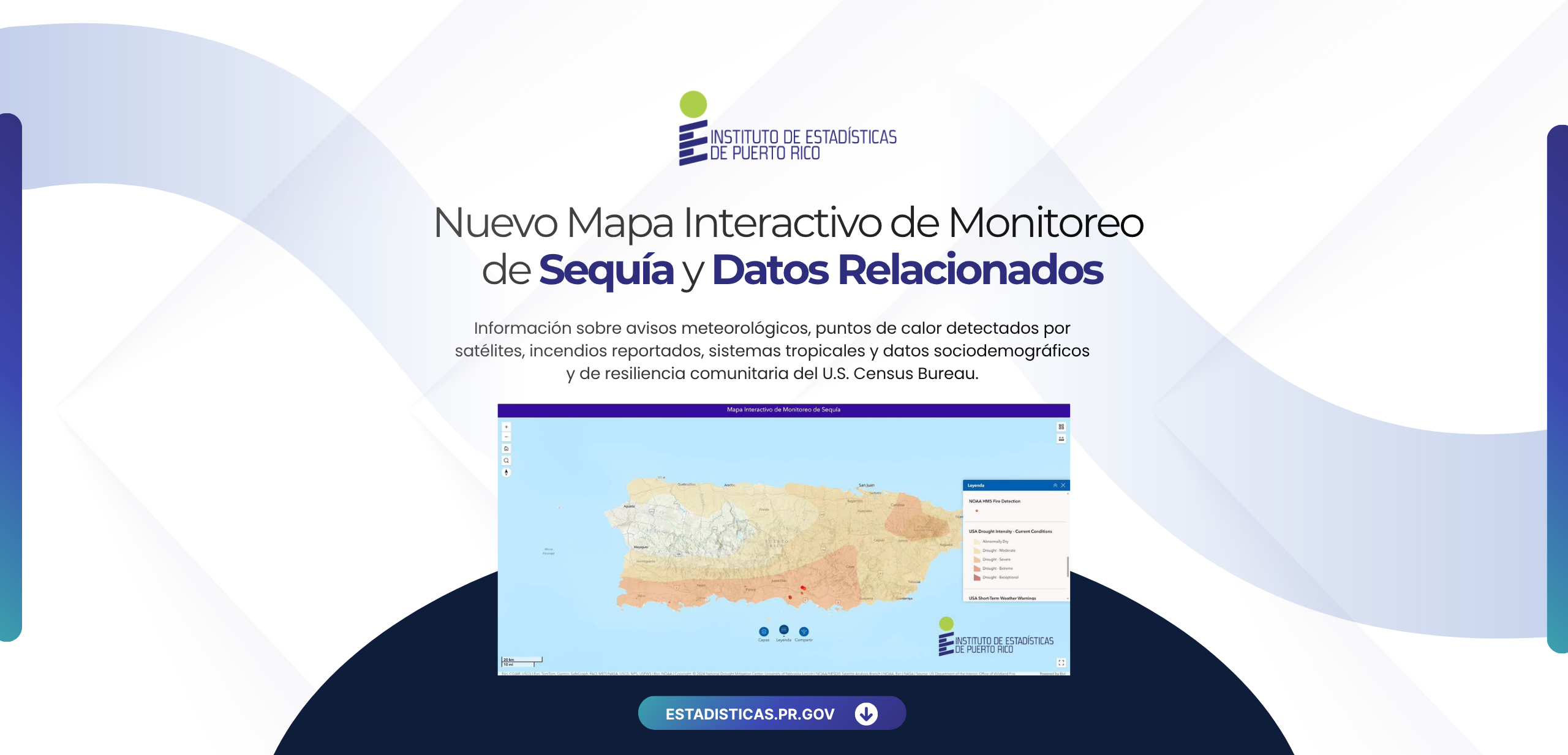
New Interactive Drought Monitoring and Related Data Map
This new tool from the Puerto Rico Institute of Statistics integrates information on weather alerts, satellite-detected hotspots, reported fires, tropical systems, and sociodemographic and community resilience data from the U.S. Census Bureau into a single location.
The primary purpose of this tool is to facilitate the monitoring of drought conditions and support planning, preparedness, and decision-making through updated geospatial information.
Explore the map at: www.estadisticas.pr.gov/productos/mapasequia

Episode 2 of the second season of The Institute of Statistics: The Podcast is now available!
Access Episode 2 of Season 2 of “The Institute of Statistics: The Podcast.”
In this new episode, Dr. Idania Rodríguez Ayuso, Deputy Executive Director of the Institute, discusses “The Silence That Precedes Homicide,” as part of the Collective Action for Violence Prevention in Puerto Rico Symposium.
In the second half of 2024, 2,149 domestic violence cases were evaluated in Puerto Rico. The statistic is devastating: 1 in 4 complainants faces an imminent risk of death. Risk assessment is not just a protocol; it is the bridge between a complaint and a protected life. Identifying lethality before it occurs is our collective mission.
Access the episode at: https://open.spotify.com/episode/7dsIhnifgP6LiD4ImNVG4t.
Inflation reflects how the prices of goods and services change over time. Analyzing it helps us understand the purchasing power of households in Puerto Rico.
Please let us know your satisfaction level with our services.
Visit our Official Activities, and participate with us
Visit our Calls for applications and be part of the new opportunities we have for you.
If you have any questions or just want to contact us, visit the Contact Us section.
We are at your disposal. If you need custom statistics, do not hesitate to contact us.
Sign up for our online workshops. Connect with the experts and discover the power of data!
Visit our Blog and keep up to date with the latest news and topics of interest.
Visit our Press Releases and stay connected to the Institute.
Explore the Publication Calendar and keep up to date with Puerto Rico's statistics.
Complete the form for the selection of our Statistics Coordination Committee
Suscribe to receive news directly to your email.
Listen to the Official PRIS podcast and stay informed with the experts

.png)
.png)
.png)
.png)

-p-130x130q80.png)
.png)
.png)
.png)
.png)
.png)
.png)
.png)
.png)
.png)
.png)
.png)