


Durante el año 2025, las importaciones de chocolate y demás preparaciones alimenticias que contengan cacao (HTS 1806) en Puerto Rico mostraron una tendencia creciente durante la segunda mitad del año. A partir de julio, cuando se registraron $8.5 millones, el valor de las importaciones aumentó progresivamente, alcanzando $9.2 millones en agosto, $10.5 millones en septiembre y un máximo de $12.5 millones en octubre. Este comportamiento coincide con el periodo previo a las festividades de Halloween, cuando estos productos suelen tener una mayor presencia en el mercado.
Las estadísticas de comercio exterior permiten conocer el comportamiento de los bienes que ingresan a Puerto Rico, identificar tendencias y analizar sus países de origen. Estos datos ayudan a las empresas a planificar sus operaciones, anticipar cambios en el mercado e identificar oportunidades de negocio a partir del comportamiento de las importaciones.
Fuente: Comercio Exterior - Instituto de Estadísticas de Puerto Rico
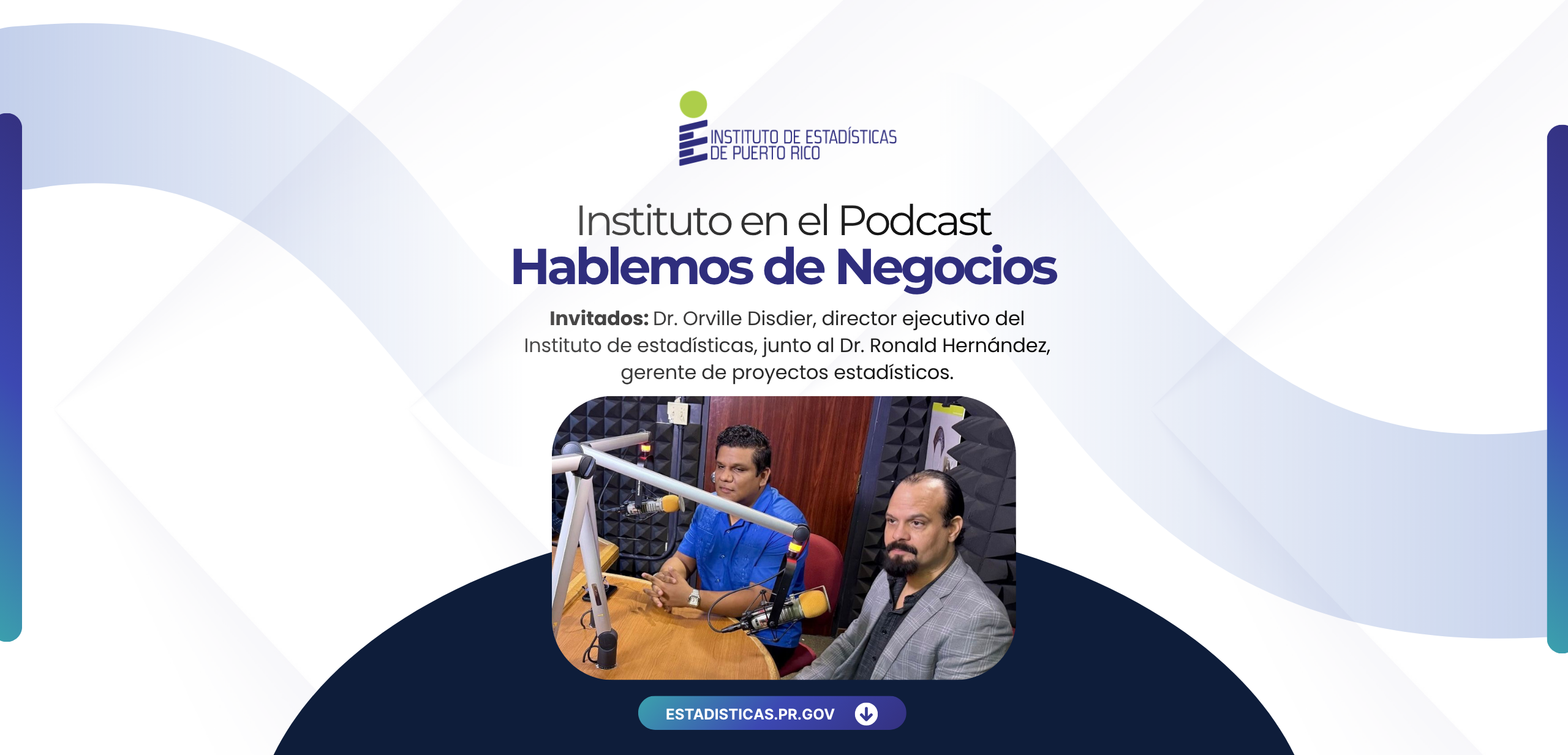
In the podcast Let's Talk About Business, Dr. Orville Disdier, executive director of the Puerto Rico Institute of Statistics, together with Dr. Ronald Hernández, manager of statistical projects, addressed various topics about the role of statistics in making informed decisions.
Among these issues, they highlighted one of the most debated — and often misinterpreted — concepts, inequality.
In a simple way, they describe it as the distance between those who have greater and lower purchasing power within a society. The larger that gap, the greater the inequality. In the case of Puerto Rico, they pointed out that, although not all people live in poverty, there is a significant difference between the extremes. Even if the group with the highest purchasing power is small, its impact on measurement is large due to this marked difference.
Why does it matter to understand this?
Because inequality is not just an economic fact. It is linked to social factors such as access to education, opportunities and even social tensions that can arise when the gaps are very wide.
In addition, the doctors emphasized that correctly interpreting these data makes it possible to better evaluate initiatives—such as economic aid or public policies—that seek to reduce this gap.
In short:
Understanding inequality is key to making informed decisions and building a more equitable society. We share the interview for the benefit of all and so that they can expand on these and other topics.
Access the interview: https://open.spotify.com/episode/5WDAUhFpJY9PKoQFoLmPV1?si=CtZVKuCKRMSg0h793ZbeGQ&pi=-e_fQ8PaS9WJi&t=17
How many babies are born each year for every 1,000 people? This is the birth rate: a fundamental indicator for planning health and education services.
How many new members are joining our big family? The birth rate allows you to plan everything from schools to children's health services.
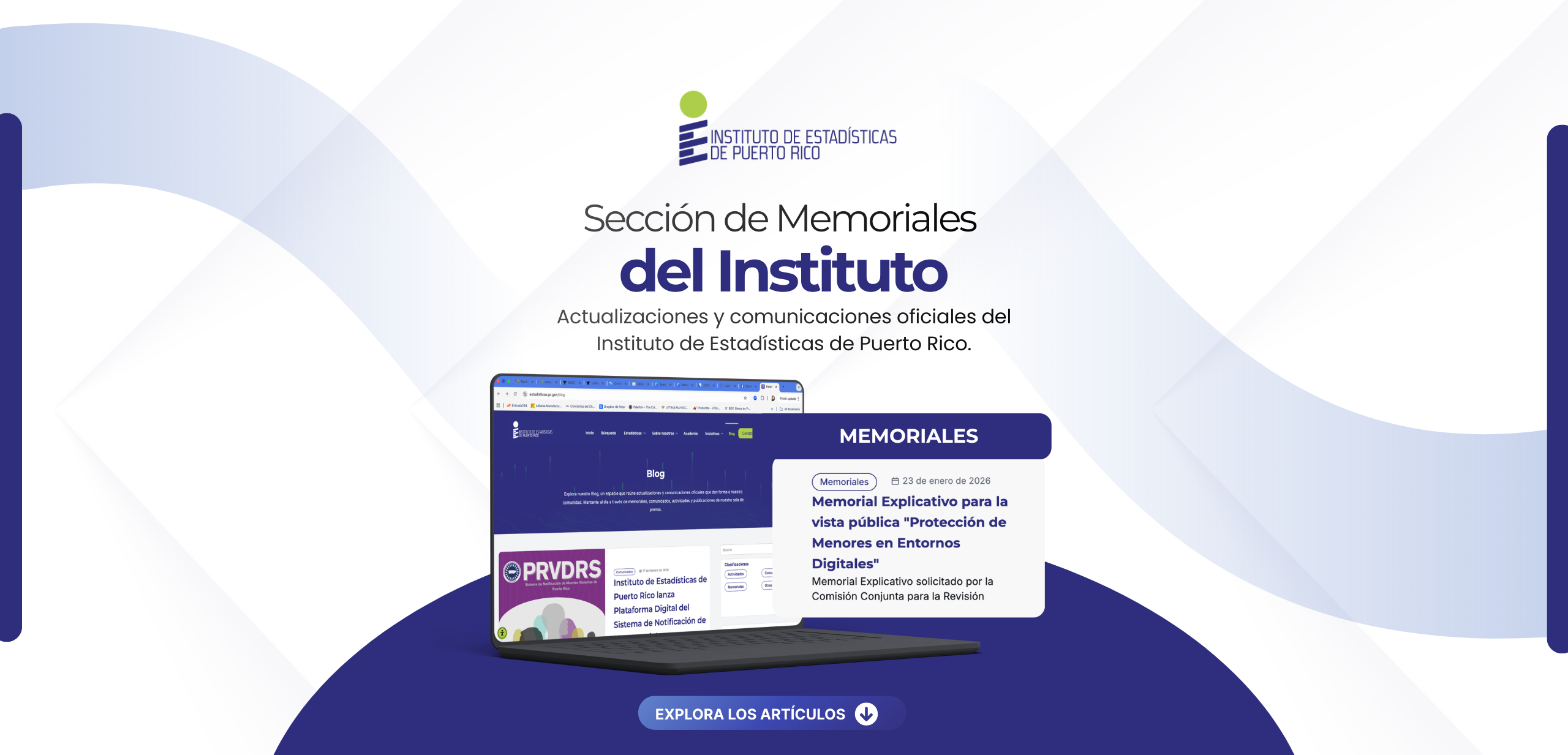
Memorial Explicativo solicitado por la Comisión Conjunta para la Revisión Continua del Código Penal de Puerto Rico del Senado para la vista pública "Protección, Manejo y Conservación de Evidencia Digital en Casos Penales".
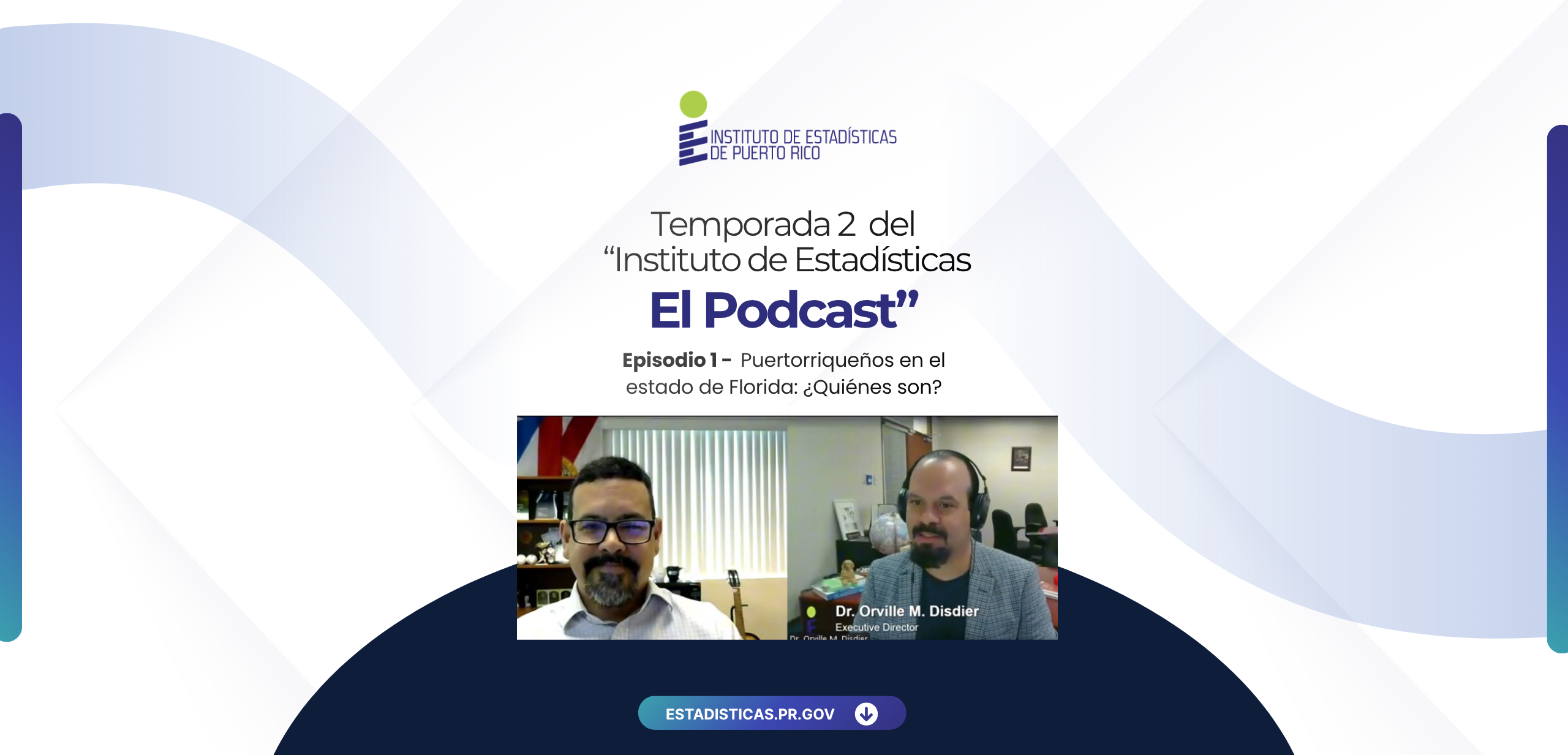
Season 2 has started!
Access Episode 1 of the new season of “The Institute of Statistics: The Podcast” (video version) and discover the demographic characteristics of Puerto Ricans living in the state of Florida.
In this episode, Dr. Orville M. Disdier, Executive Director of the Institute, and Dr. Fernando Rivera, of the Puerto Rico Research Hub, discuss the factors of attraction and drive, in addition to analyzing current challenges.
Watch the full episode on our YouTube channel: https://youtu.be/WXaty7W9XX8?si=XPF8HOCpyrBpCx8X.
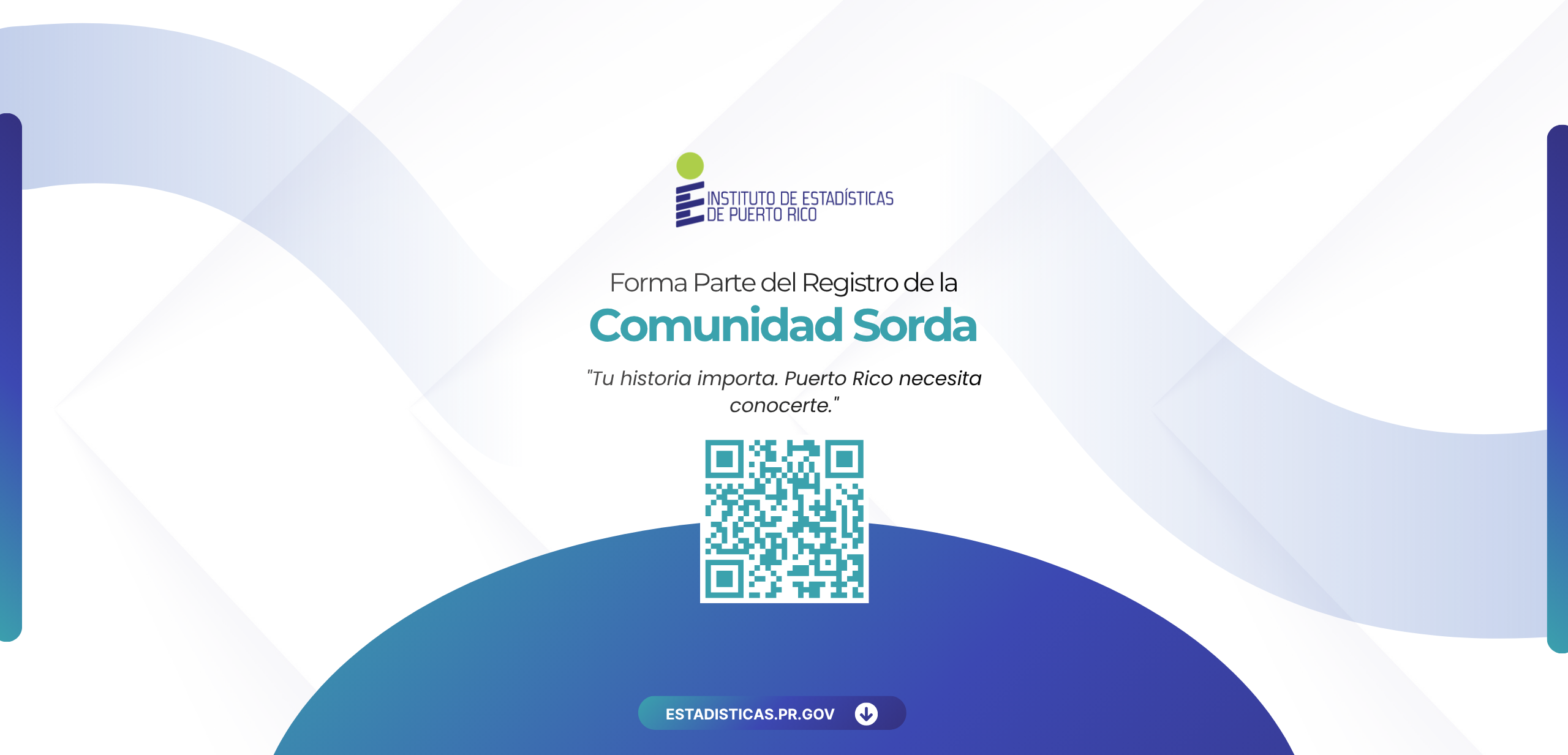
Press Release
Exhortation to the deaf community and their families to complete registration to strengthen the information available on this population in Puerto Rico
San Juan, Puerto Rico — March 18, 2026. The Puerto Rico Statistics Institute (Institute), in collaboration with the Deaf Community Liaison Office and several agencies of the Government of Puerto Rico, urged deaf people, people with partial hearing loss, deafblind people and their families to participate in an online registry that will allow the collection of key information about this population in Puerto Rico.
The initiative is developed in accordance with Executive Order OE-2026-002, issued by the governor of Puerto Rico, Jennifer A. González Colón, which instructs the Institute of Statistics, in collaboration with the Department of Health, the University of Puerto Rico, the Vocational Rehabilitation Administration, the Deaf Community Liaison Office and other entities, to carry out a formal effort to collect information about the deaf community in Puerto Rico and its characteristics, including the communication methods used.
As explained by the executive director of the Institute, Dr. Orville M. Disdier, community participation is essential for reliable information to guide public decision-making and the development of initiatives aimed at this population. “Having reliable information is essential to be able to develop public policies and services that respond to the real needs of the community. That's why we invite deaf people, those with hearing loss and their families to participate in this registry. Their participation will strengthen knowledge about this population and support informed decisions for the benefit of the deaf community in Puerto Rico,” said Disdier.
It takes three to five minutes to complete the registration. Participation is encouraged to:
Interested persons can complete the registration at the following link: surveymonkey.com/r/deafspr
Information and guidance
Individuals or organizations interested in receiving guidance or collaborating in the dissemination of this information can contact:
Deaf Community Liaison Office (OECS)
Phone: 787-725-2333 ext. 203
VRS: 787-773-1487
Email: oecs@dpi.pr.gov
Website: www.dpi.pr.gov
Puerto Rico Institute of Statistics
Telephone: 787-819-0730
Email: preguntas@estadisticas.pr

Please let us know your satisfaction level with our services.
Visit our Official Activities, and participate with us
Visit our Calls for applications and be part of the new opportunities we have for you.
If you have any questions or just want to contact us, visit the Contact Us section.
We are at your disposal. If you need custom statistics, do not hesitate to contact us.
Sign up for our online workshops. Connect with the experts and discover the power of data!
Visit our Blog and keep up to date with the latest news and topics of interest.
Visit our Press Releases and stay connected to the Institute.
Explore the Publication Calendar and keep up to date with Puerto Rico's statistics.
Complete the form for the selection of our Statistics Coordination Committee
Suscribe to receive news directly to your email.
Listen to the Official PRIS podcast and stay informed with the experts