Nearly half of all homicides of women recorded in Puerto Rico between 2021 and August 2026 were femicides.
Announcements
IEPR
02 October 2026
Nearly half of all homicides of women recorded in Puerto Rico between 2021 and August 2026 were femicides.
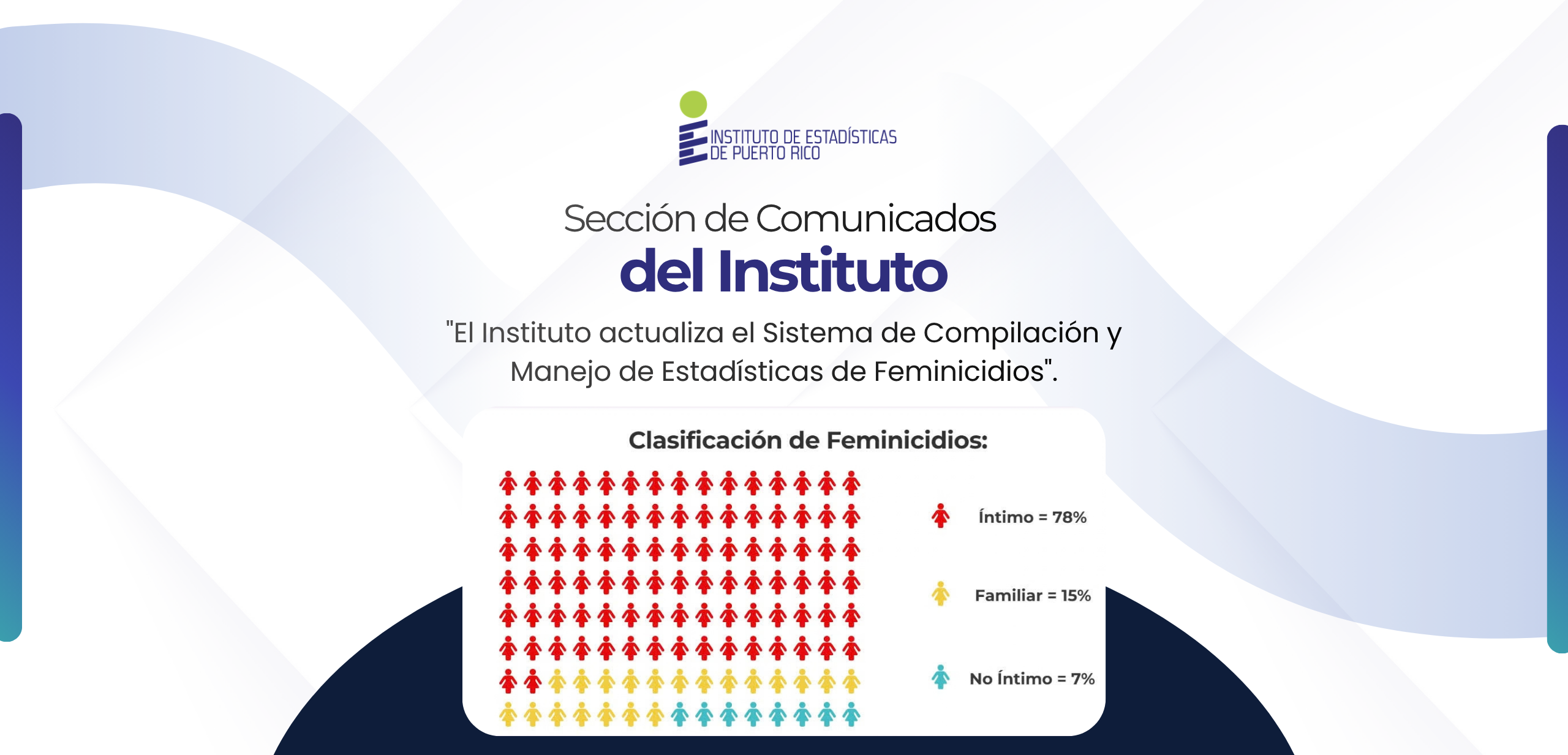
Of the 128 identified femicides, 119 were classified as intimate or familial, according to updated data from the Puerto Rico Institute of Statistics.
Of the 263 homicides of women recorded in Puerto Rico between 2021 and August 2026, 128 (48.7%) were classified as femicides. This data is derived from the update to the Puerto Rico Institute of Statistics' Femicide Statistics Compilation and Management System.
The update also reveals that 119 of the 128 femicides (93.0%) were classified as intimate or familial. In these cases, the perpetrator was the victim's partner or a family member, according to the system's classification. The portal incorporates data for 2026 and new indicators regarding the annual total of femicides and cases followed by the perpetrator's suicide. Additionally, it presents a new infographic on femicides recorded between 2021 and 2025 and a redesigned interface to facilitate data consultation and understanding. These data reflect that a significant proportion of femicides occur within the context of close relationships, highlighting the importance of examining gender-based violence and its manifestations within intimate partner and family settings.
Mariluz Bezares Salinas, Statistical Project Manager at the Institute of Statistics, stated, "This data reminds us that femicidal violence continues to claim lives in Puerto Rico and that addressing it requires a sustained response. That is why it is important to continue collecting and analyzing information that helps us better understand these cases, identify patterns, and recognize the factors associated with this issue. Continuing our research allows us to seek more effective ways to prevent and respond to these situations."
Additionally, a new infographic has been added to the femicide dashboard. It presents further information on the context of femicides that occurred during the 2021–2025 period, including the profile of the victims and the mechanism of death, among other variables. The infographic also includes sections dedicated to intimate femicides and femicides followed by the perpetrator's suicide, with specific information on the characteristics of these events.
"Continuing to make this data accessible is crucial to raising awareness of the magnitude of this problem and providing authorities and organizations with evidence-based tools that lead us toward the eradication of violence and saving lives," said Dr. Orville M. Disdier, Executive Director of the Puerto Rico Institute of Statistics.
Six municipalities with at least 60% of their population living in poverty
They are located in the center and south-west according to the Map Series of the Puerto Rico Census Data Network
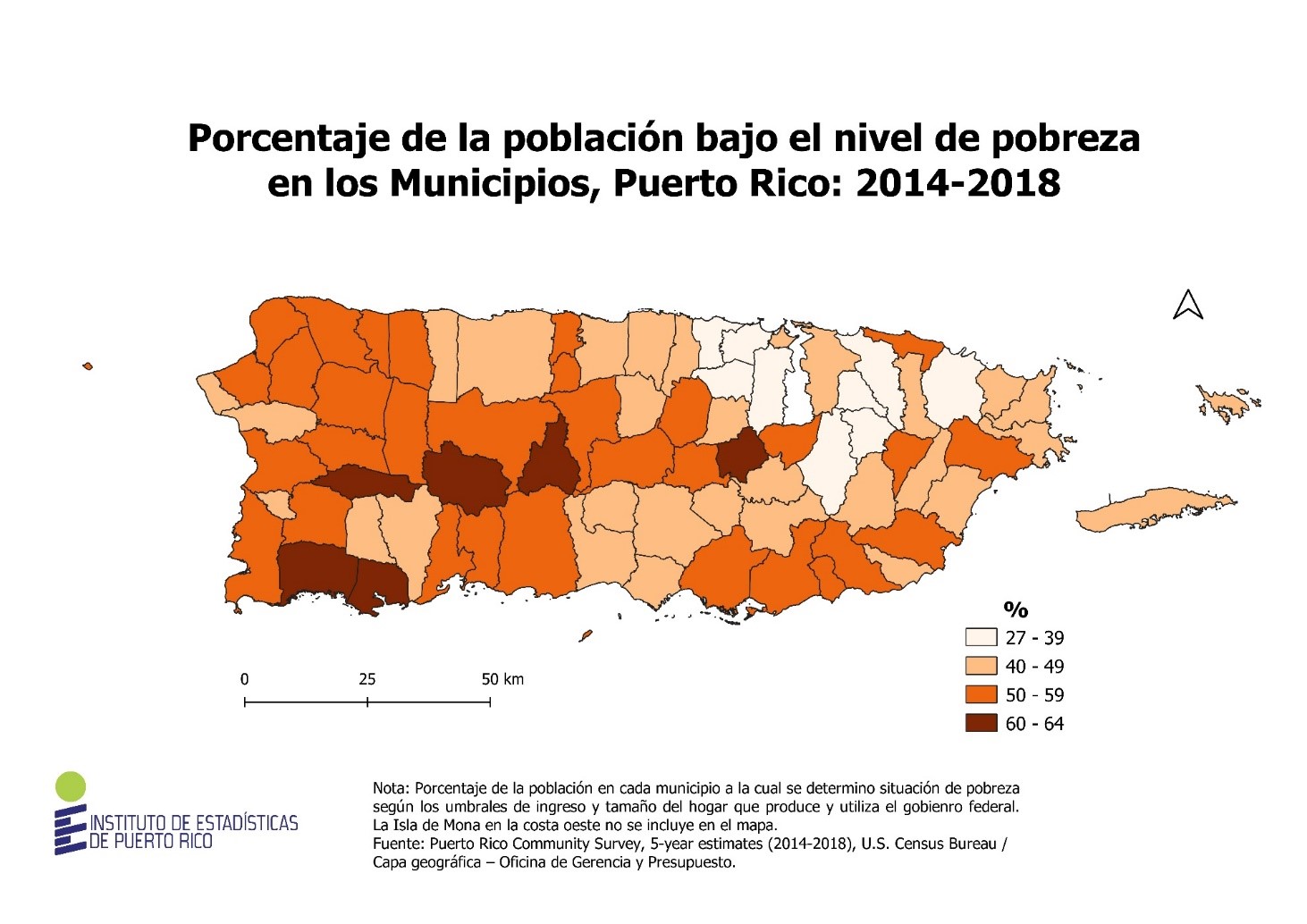
San Juan, PR, November 17, 2020 — The percentage of people living in poverty shows that six municipalities have between 60% and 64% of their population with this characteristic. The geographical distribution shows that they are located in the center and southwest of Puerto Rico, these being Maricao, Guánica, Adjuntas, Lajas, Jayuya and Comerío. La Selected Indicator Map Series includes the information collected during the period 2014-2018 through the Community Survey carried out by U.S. Census Bureau. This series includes ten indicators on demographic, social and economic topics at the level of municipalities and neighborhoods in Puerto Rico.
In addition, with information from the same period (2014-2018), the Socio-Demographic Profiles of Puerto Rico's Electoral Districts Which are divided volume IandII, with the 8 Senate Districts and with the 40 Representative Districts respectively. These provide a detailed photograph of each electoral district with essential information to know the particularities of the population that resides in each of them.
Both new products (Map and Profile Series) are part of the publications of the Puerto Rico Census Data Network (SDC-PR by its acronym in English). All of them can be accessed free of charge on the SDC-PRcenso.estadisticas.pr. As a local liaison entity with the U.S. Census Bureau, the Institute of Statistics shares several findings from the Selected Indicator Map Series:
Among the 10 municipalities with the highest percentage of children under 18, eight of them were in the southern and central region of Puerto Rico. On the other hand, the 4 municipalities with the lowest percentage of minors were Guaynabo, and to the west Rincón, Mayagüez and Hormigueros.
The highest percentages of the 18-64 year old population were in 7 municipalities, these being Toa Alta, Aguada, Morovis, and in the central-eastern area Cidra, Gurabo, Juncos and San Lorenzo. On the other hand, the municipalities with the lowest percentages of the population aged 18-64 are located mainly in the southwest (Hormigueros, San Germán, Sabana Grande, Lajas and Guánica) and to the east (Fajardo, Ceiba and Culebra).
The municipalities with the highest percentage of elderly people (65+) are shown to be in the western area of Hormigueros, San Germán, Lajas and Rincón.
Municipalities with the highest percentages (80%-84%) of people with a higher education level or higher are geographically concentrated in the metropolitan area, in addition to Santa Isabel on the south coast. On the other hand, the two municipalities with the lowest percentage of education attained are located in the midwest (Maricao and Las Marías).
As for the population with disabilities (reported on their own account), 6 of the 10 municipalities with the highest percentages (Cayey, Cidra, Comerío, Aguas Buenas, Naranjito and Orocovis) are geographically concentrated in the central area, and the other 4 municipalities are located in the south-west (Guánica, Sabana Grande, Hormigueros and Yauco). On the other hand, a concentration of municipalities in the south-east region reflected hundreds of children with disabilities (< 15%), with 9 of the 13 municipalities in this category including the island municipalities of Vieques and Culebra.
In the metropolitan region, east and south, most of the municipalities with the highest percentage (50%-74%) of households with access to broadband internet are clustered. In a situation of lower access, some 4 municipalities in the western region showed that they had less than 35% of their homes with internet access, these being Lajas, Cabo Rojo, Maricao and Las Marías.
In percentage terms, the population in 37 municipalities around Puerto Rico was shown to have half of its population or more (50% +) living in poverty. Municipalities with the lowest percentage of people in poverty are located in the metropolitan area with the exception of the municipalities of San Juan and Cataño.
Regarding family income across municipalities, this indicates that about 7 municipalities (Gurabo, Trujillo Alto, Dorado, Carolina, Toa Alta, Culebra and Bayamón) showed a median of between $30,000 and $39,000 in family income. The municipality with the highest median household income was Guaynabo ($44,000).
The highest percentage of people in the workforce (50%-57%) are mostly municipalities in the metropolitan area and the Northeast, where 11 of the 13 municipalities with this characteristic are located, Culebra and Juana Diaz the only ones outside these regions.
“The series of maps provides a geographical perspective on features of interest within Puerto Rico. The behavior of geographical patterns could support government and community management, analysis for decision-making, and stimulate research. In the same sense, the profiles of the electoral districts serve as basic metrics for current and future public policy that affects the residents of these regions.” said Alberto L. Velázquez-Estrada, Manager of Statistical Projects at the Institute.
The Puerto Rico Statistics Institute is an autonomous governmental entity responsible for coordinating the Government's statistical production service to ensure that the data collection and statistics systems, on which public policies are based, are complete, reliable, and have quick and universal access. In addition, as the leading entity of the SDC in Puerto Rico, the Institute manages the SDC portal, which contains the main statistical reports and publications of the U.S. Census Bureau on Puerto Rico, specifically those that are most in demand, such as annual population estimates; the Puerto Rico Community Survey (Puerto Rico Community Survey) and official statistics on Puerto Rico's 10-year population and housing censuses, among others. The Puerto Rico SDC portal can be accessed through: https://censo.estadisticas.pr/.
For more information you can visit our website: www.estadisticas.pr.gov. In addition, you can follow us on social networks through Facebook (@estadisticas .pr), Twitter (@EstadisticasPR) and LinkedIn (Institute of Statistics of Puerto Rico) accounts.
Presentan Sistema de Indicadores de Puerto Rico: http://www.indicadores.pr. El nuevo portal permite un acceso fácil y rápido a los indicadores estadísticos de mayor importancia para Puerto Rico desde un solo lugar
Authorized Statements by Dr. Mario Marazzi-Santiago, Executive Director of the Puerto Rico Institute of Statistics, on Statistics of Occupied Government Positions

-p-130x130q80.png)
.png)
.png)
.png)
.png)
.png)
.png)
.png)
.png)
.png)
.png)
.png)


.png)
.png)
.png)
.png)