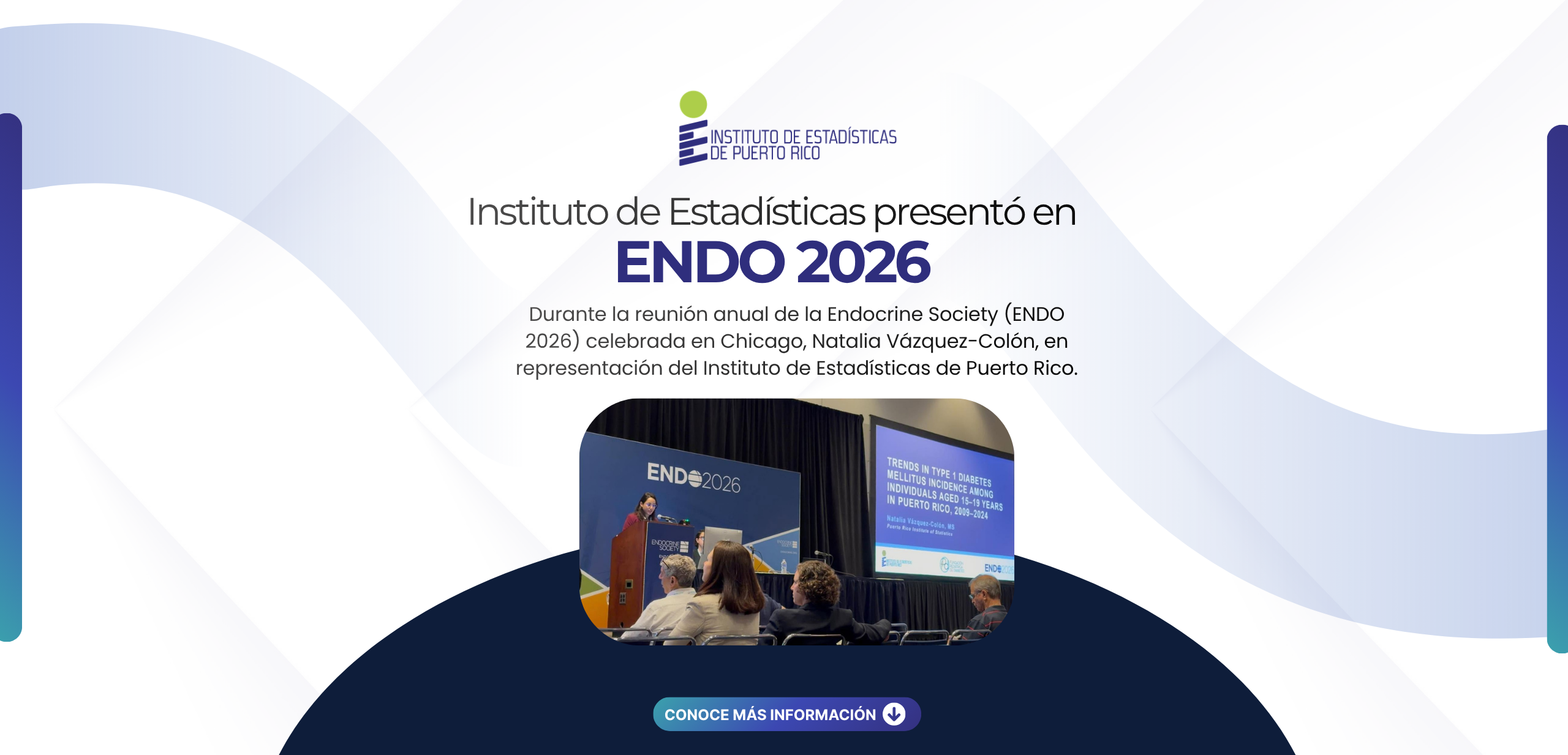

During the annual meeting of the Endocrine Society (ENDO 2026) held in Chicago, Natalia Vázquez-Colón, representing the Puerto Rico Institute of Statistics, presented original research on the incidence of type 1 diabetes in adolescents aged 15 to 19 in Puerto Rico.
The results showed an upward trend in incidence during the 2009–2024 period. The analysis identified a significant average annual growth of 4.1%.
The research was conducted through a collaboration between the Institute of Statistics and the Pediatric Diabetes Foundation. Participation in ENDO 2026 allowed for sharing scientific evidence generated in Puerto Rico with a highly prestigious national and international audience of researchers, academics, and clinicians.
Access a copy of the presentation at: Trends in Type 1 Diabetes Mellitus Among Individuals Aged 15-19 Years in Puerto Rico.

San Juan, PR — The U.S. Census Bureau today released the most recent data from the Puerto Rico Community Survey known as the Puerto Rico Community Survey (PRCS) at the municipal level. These statistics refer to information collected from 2012 to 2016, a period of 5 years or a five-year period. The new publication provides data on social, economic and housing characteristics for Puerto Rico and for all municipalities, as well as for some specific geographical levels such as neighborhoods, census tracts and block groups. As the leading entity of the U.S. Census Bureau's State Data Center Network in Puerto Rico, the Puerto Rico Statistics Institute (Institute) presents this brief summary of some of the results:
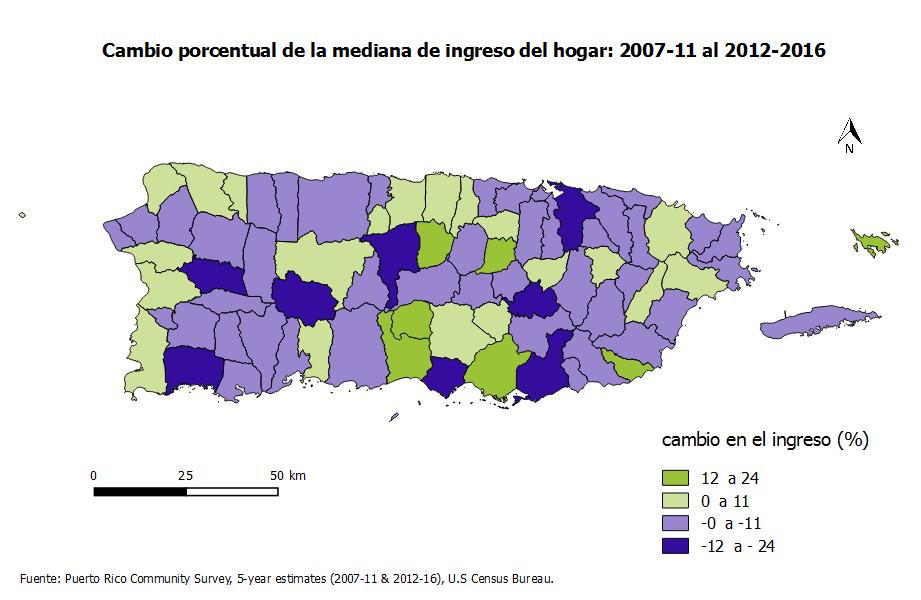
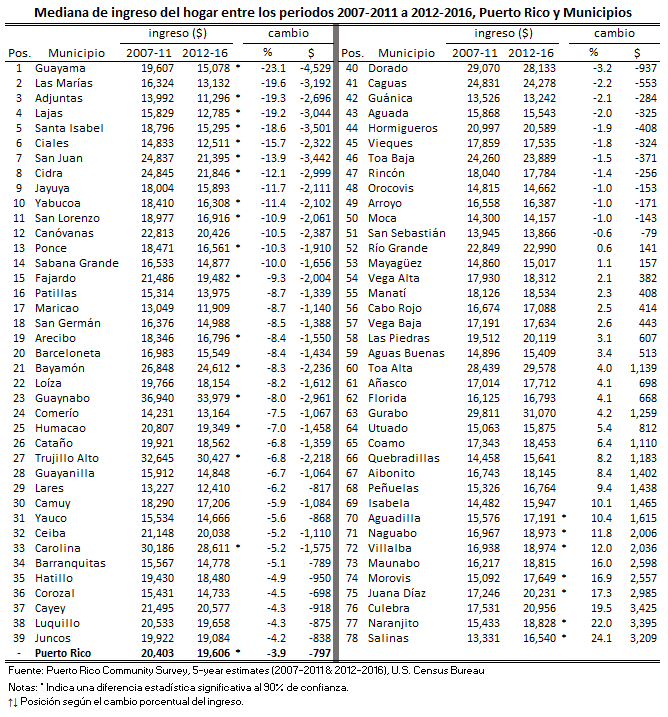
At the Puerto Rico level, data indicate a reduction of about $800 in household income during the most recent five-year period 2012-16 compared to the previous 2007-2011. Looking at income by category, the proportion of households with incomes under $10,000 increased from 28% to 29% between the two periods, pointing to more households with minimum incomes in Puerto Rico. As for municipalities, 65% of these reflected a decrease in the median household income without showing any particular geographical pattern. On the other hand, seven municipalities showed an increase of 12% or more in household income, located in the center, south and east of Puerto Rico,” said Alberto L. Velázquez-Estrada, manager of statistical projects at the Institute.
More statistics on the Community Survey estimates can be obtained at: http://factfinder2.census.gov/. If you need assistance using this tool to get
data, you may find the self-study guide useful for using this available tool: https://censo.estadisticas.pr/fact-finder . Information on the methodology used to produce the estimates can be accessed here.
In addition, as the leading entity of Puerto Rico's SDC, the IEPR manages the SDC portal, which contains the main statistical reports and publications of the U.S. Census Bureau on Puerto Rico, specifically those that are most in demand, such as annual population estimates; the Puerto Rico Community Survey and official statistics on Puerto Rico's decennial population and housing censuses, among others. The Puerto Rico SDC portal can be accessed through: https://censo.estadisticas.pr/.
The Puerto Rico Statistics Institute is an autonomous governmental entity responsible for coordinating the Government's statistical production service to ensure that the data collection and statistics systems, on which public policies are based, are complete, reliable, and have quick and universal access. The Institute has in its inventory, accessible through
https://estadisticas.pr.gov, over 300 statistical products. In addition, it is a custodian and provides access to over 100 data sets or “data sets” through www.data.pr.gov and to over 40 tables and more than 6 thousand indicators through: www.indicadores.pr.
For more information you can visit our website: https://estadisticas.pr.gov. In addition, you can follow us on social networks through Facebook (estadisticas.pr), Twitter (@EstadisticasPR) and LinkedIn (Institute of Statistics of Puerto Rico) accounts.
Press Contact: Sandra Morales Blanes (787) 688-0401
Demographic impact and population projections after the passage of hurricanes Irma and María.
To create the “Puerto Rico Mobile Emergency Alert System Act”; establish the obligation of mobile phone companies to implement an emergency alert system for mobile devices in Puerto Rico; establish regulatory authority; and for other related purposes.P. of C. 1103: To create the “Wireless Alert Warning Act for Beach and Coastal Area Users in Dangerous Maritime Conditions in Puerto Rico”; order commercial mobile service providers to adopt the necessary mechanisms to issue such warnings; to outline the scope of the regulation; and for other related purposes.
Statistics Institute creates section to provide data on Hurricane Maria
The U.S. Census Bureau projects Puerto Rico's population will be below three million in just 8 years (2025).
Some 67,000 people immigrated to the United States in 2016, the highest migration rate recorded in 12 years.
Please let us know your satisfaction level with our services.
Visit our Official Activities, and participate with us
Visit our Calls for applications and be part of the new opportunities we have for you.
If you have any questions or just want to contact us, visit the Contact Us section.
We are at your disposal. If you need custom statistics, do not hesitate to contact us.
Sign up for our online workshops. Connect with the experts and discover the power of data!
Visit our Blog and keep up to date with the latest news and topics of interest.
Visit our Press Releases and stay connected to the Institute.
Explore the Publication Calendar and keep up to date with Puerto Rico's statistics.
Complete the form for the selection of our Statistics Coordination Committee
Suscribe to receive news directly to your email.
Listen to the Official PRIS podcast and stay informed with the experts

.png)
.png)
.png)
.png)

-p-130x130q80.png)
.png)
.png)
.png)
.png)
.png)
.png)
.png)
.png)
.png)
.png)
.png)