
Key Homicide Data in Puerto Rico: An Analysis in the International Context
The Puerto Rico Violent Death Reporting System (PRVDRS), attached to the Puerto Rico Institute of Statistics, has published a new information capsule with 2024 data analyzing the archipelago's situation compared to the rest of the world.
Below, we highlight the most relevant findings regarding the incidence of homicides in Puerto Rico and worldwide:
Puerto Rico's Position in the Region
- Homicide Rate: Puerto Rico recorded a crude rate of 15.2 homicides per 100,000 inhabitants.
- Caribbean Ranking: Among the 11 countries and jurisdictions analyzed in the Caribbean region, Puerto Rico ranks 10th, placing below jurisdictions such as the Turks and Caicos Islands (103.2), Haiti (64.3), Trinidad and Tobago (41.5), and Jamaica (40.4).
- Compared to the Regional Average: Although Puerto Rico's figure (15.2) sits below the Latin America and Caribbean average (19.3), it remains nearly three times higher than the global homicide average (5.1 per 100,000 inhabitants).
Firearm Prevalence: Puerto Rico – The Second Highest Figure in the Region
- 89.2% of Homicides Involve Firearms: Nearly 9 out of 10 homicides in the archipelago are committed using a firearm.
- Regional Leader: Alongside Saint Kitts and Nevis (89.3%), Puerto Rico presented the highest proportion of firearm homicides in all of Latin America and the Caribbean.
- International Contrast: This figure far exceeds the global average for firearm homicides (67.2%). The document emphasizes that a large portion of these incidents in Puerto Rico is related to organized crime.
Comparison by Gender and Racial Groups (Puerto Rico vs. United States)
When adjusting rates by age and comparing Puerto Rico's population with various groups in the U.S., significant disparities by sex are observed:
- Men: Men in Puerto Rico present the second-highest homicide risk rate (32.5 per 100,000 inhabitants), surpassed only by Black men in the U.S. (41.5). This figure is considerably higher than that of Hispanic men (8.6) and White men (3.6) in the U.S.
- Women: The adjusted rate for women in Puerto Rico is 3.9 per 100,000 inhabitants, placing below the risk level observed in Black women (6.9) and Native American women (5.9) in the U.S.
For more information, download the information capsule in the Access the Document section.
About the Data Source
The PRVDRS was established in 2016 with support from the Centers for Disease Control and Prevention (CDC). The system consolidates and validates information from the Bureau of Forensic Sciences, the Puerto Rico Police, and the Demographic Registry of the Department of Health to generate rigorous and internationally comparable statistics.
Links of interest: Puerto Rico Violent Death Reporting System
69% of those who evaluated their communication experience in healthcare services rated it as fair or poor.
The Puerto Rico Institute of Statistics presented the results of the Registry and Study of Needs of the Deaf Community in Puerto Rico for the period of January 13 to July 24, 2026. The results underscore the importance of having sign language interpreters and trained staff to facilitate this population's access to essential services. According to the report, 89% of those who responded to the needs questionnaire indicated they had visited a hospital, clinic, or doctor's office within the last year. Among the issues noted when evaluating communication in these settings were the lack of interpreters and the absence of trained staff.
Likewise, when asked what they primarily need when attending an appointment at a government office or healthcare service, respondents mentioned the need for trained staff, the availability of in-person interpreters, and the provision of forms accessible to the Deaf.
“These findings allow us to identify concrete needs to continue strengthening the accessibility of services received by the Deaf or hard-of-hearing community. Having trained staff, sign language interpreters, and accessible communication tools can make a significant difference in people's experiences and their ability to receive the guidance and services they need,” said the Institute of Statistics' executive director, Dr. Orville M. Disdier.
Key findings include:
• 89% indicated they had visited a hospital, health clinic, or doctor's office within the last year.
• 71% reported using hearing aids or a cochlear implant.
• 69% of those who evaluated their communication experience in healthcare services rated it as fair or poor.
• 67% of those who responded to the Registry indicated they have been deaf since birth.
• 62% indicated they are not currently employed.
• 61% noted they do not have access to video relay services.
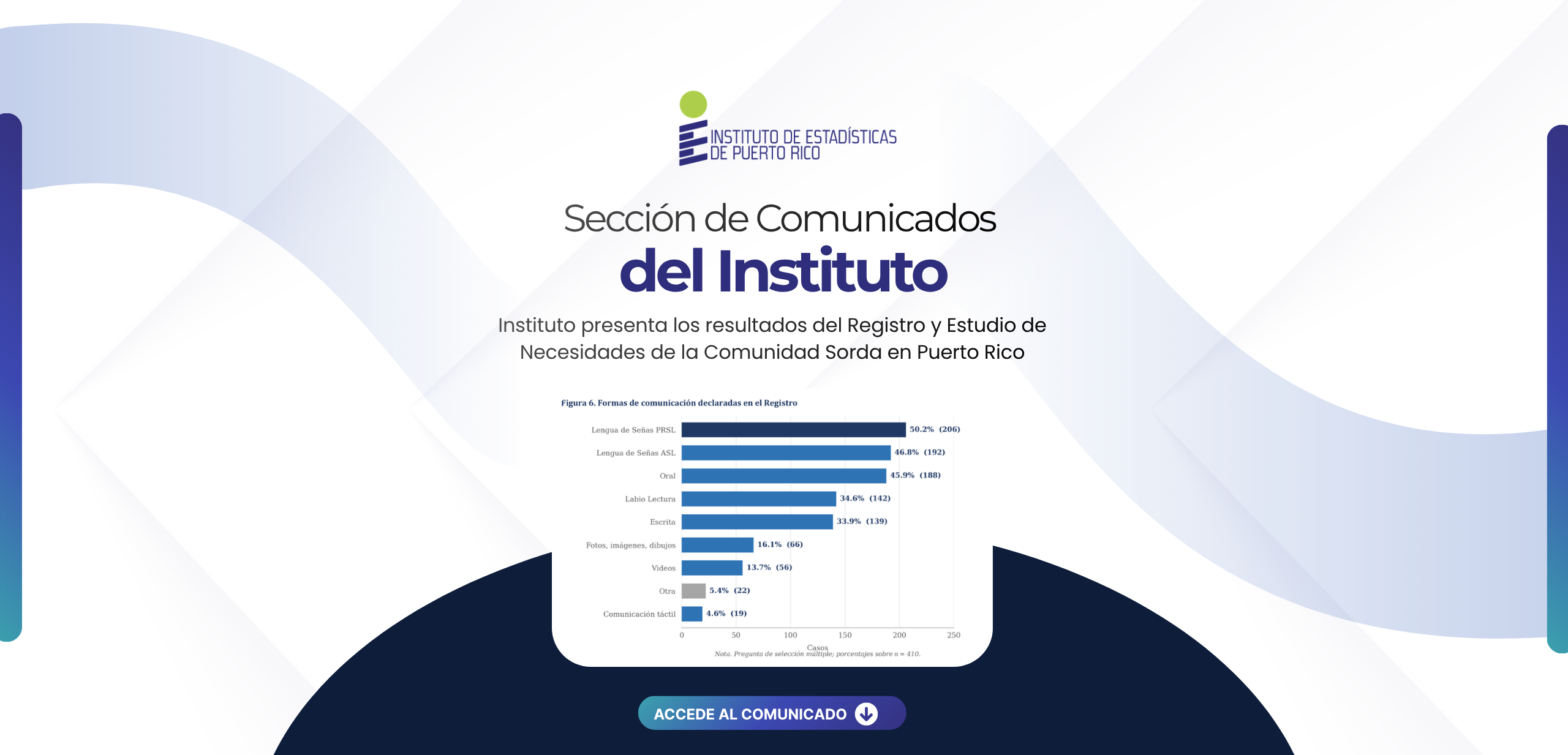
• Puerto Rican Sign Language and American Sign Language accounted for 398 mentions among the forms of communication used by those enrolled in the Registry.
The results are part of the official report prepared by the Institute in compliance with Executive Order OE-2026-002, issued by Governor Jenniffer González Colón. The document was submitted to the governor on August 12, 2026, as requested and established in the executive order.
The executive order tasked the Institute, in collaboration with various government agencies and entities, with making a formal effort to collect information on the Deaf community in Puerto Rico, including its characteristics, particularities, and forms of communication. As part of this mandate, the Institute developed two components: the Registry of Deaf Persons in Puerto Rico and the Needs Questionnaire for the Deaf Community. This builds upon the effort previously undertaken by the Institute, which culminated in the First Study of Needs of the Deaf Community in Puerto Rico, published on July 21, 2022, and available on the Institute's website.
During the analyzed period, the Registry received 803 entries, 410 of which met the established inclusion criteria. For its part, the Needs Questionnaire reached 103 processed responses.
“Understanding how this population communicates and what their needs are is fundamental to guiding decision-making and developing initiatives that respond to their reality. This effort provides us with a foundation to continue expanding the available information and promoting increasingly accessible services,” added Disdier.
“These results describe the characteristics and experiences of the people who participated voluntarily. While they should not yet be used to make estimates for the entire Deaf community in Puerto Rico or for comparisons between municipalities, they do allow us to begin formulating public policy. In this sense, we recommend expanding the project's scope, strengthening the collaboration of the agencies involved, developing a municipal outreach plan, and continuing to collect and expand the data,” explained Joselyn Santiago, one of the study's lead authors.
Although the executive order has expired, the Institute will continue to expand and update the Registry and the Needs Questionnaire until at least the end of December 2026. This will allow for the inclusion of more participants, increased geographic representation, and the strengthening of available information to continue supporting the development of public policies and services aimed at the Deaf community.
“This effort is only the beginning, as we will continue to strengthen and expand both the registry and the needs study. At the Institute, we will continue to seek the necessary resources to allow us to reach more people within the Deaf communities who wish and need to be heard and represented,” said Dr. Disdier.
The full report is available through the Puerto Rico Institute of Statistics portal at: Registry and Study of Needs of the Deaf Community in Puerto Rico.
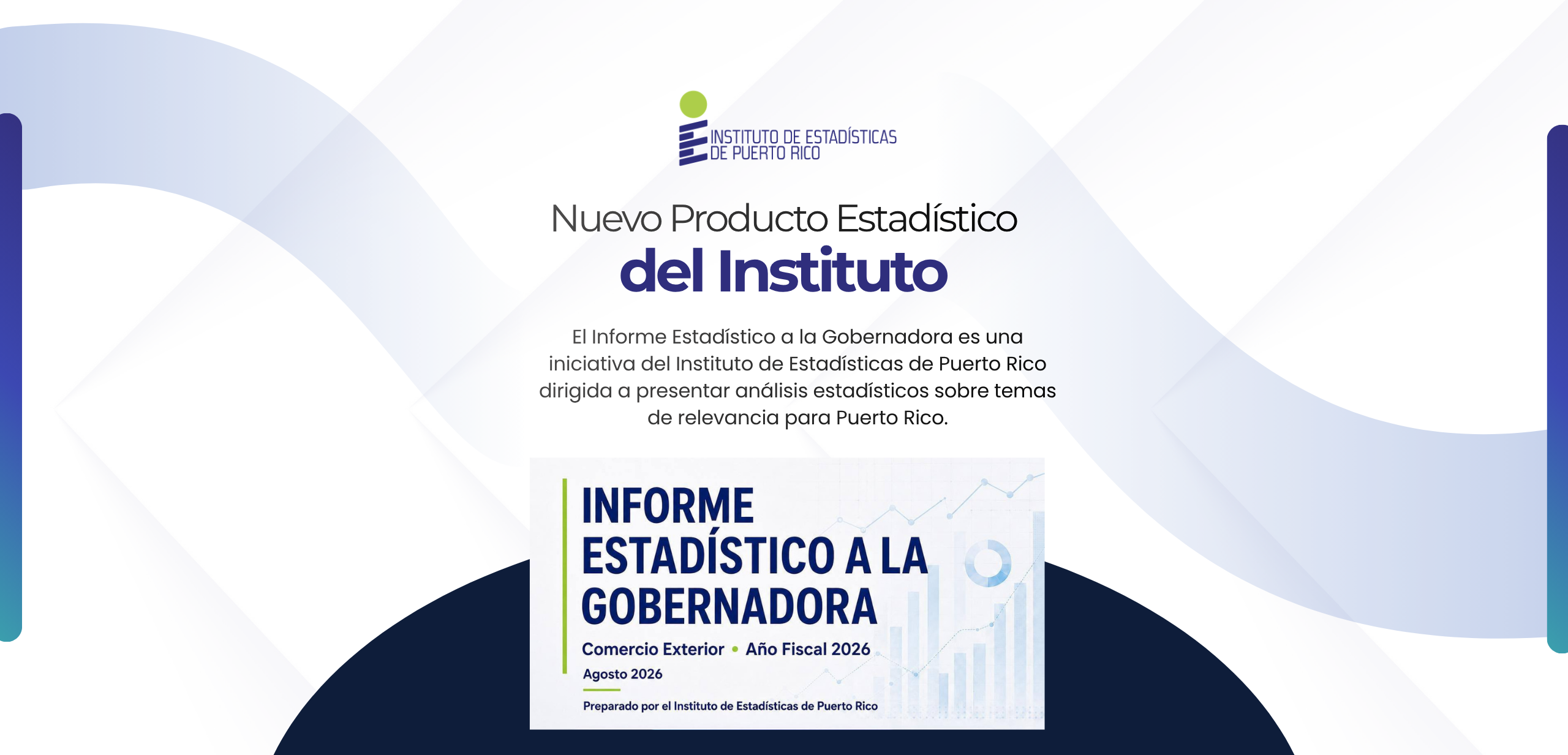
Statistical Report to the Governor - Foreign Trade Fiscal Year 2026
The Statistical Report to the Governor is an initiative by the Puerto Rico Institute of Statistics aimed at presenting statistical analyses on topics of relevance to Puerto Rico.
These reports examine data and indicators across various contexts, disciplines, and subject areas, with the goal of providing objective, evidence-based information to help understand matters of public interest.
Each edition addresses a specific theme through the analysis, integration, and interpretation of various data sources. This initiative seeks to strengthen the use of statistics as a tool for decision-making, public policy formulation, and the analysis of Puerto Rico's economic and social reality.
Access this first edition, on Foreign Trade for Fiscal Year 2026, via the following link: https://www.estadisticas.pr.gov/blogposts/informe-estadistico-a-la-gobernadora---comercio-exterior-ano-fiscal-2026.
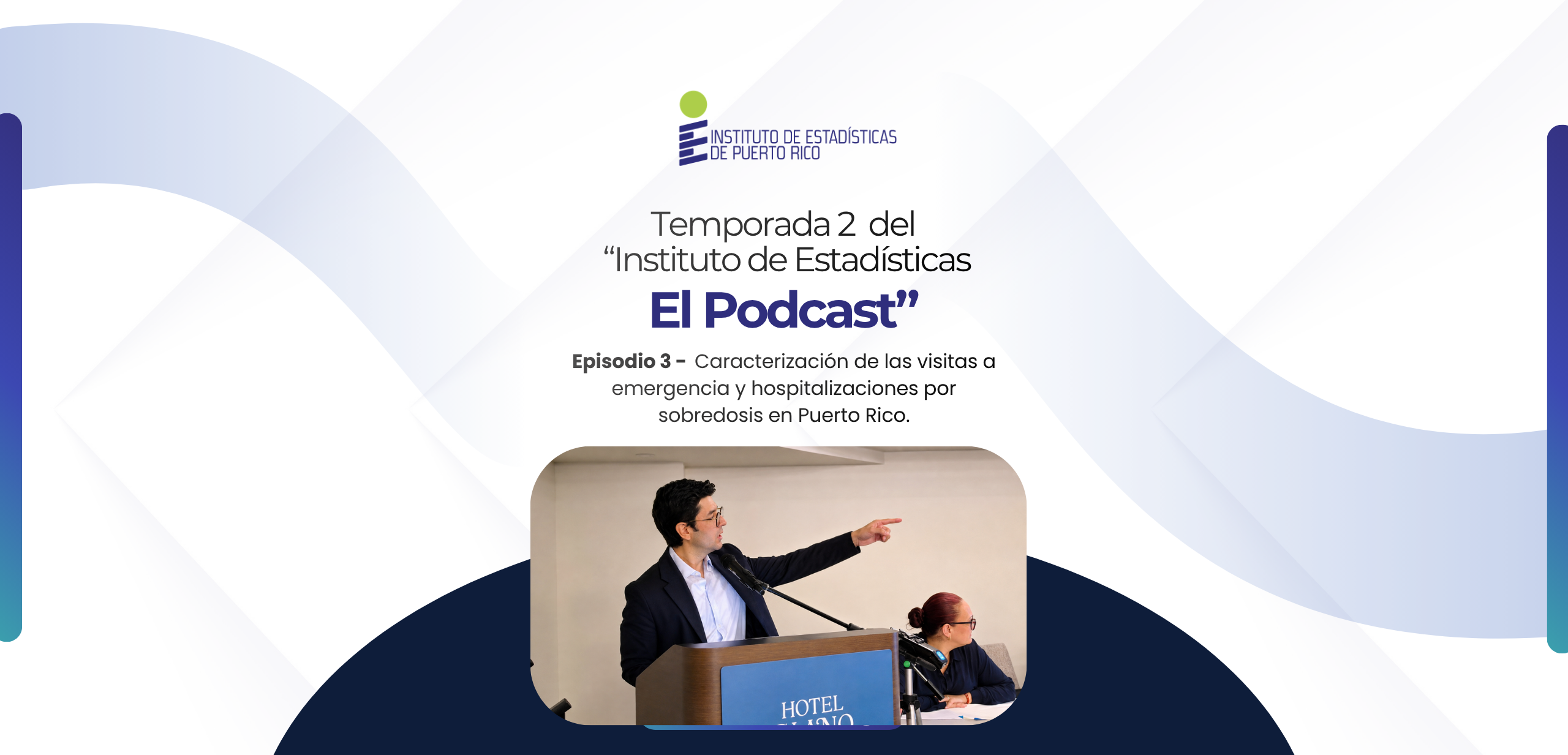
Episode 3 of Season 2 of The Institute of Statistics: The Podcast is now available!
Episode 3 (S2): Characterization of emergency room visits and hospitalizations for overdoses in Puerto Rico.
In this episode, Dr. Eduardo J. Zavala-Mendoza, lead substance abuse researcher for the Puerto Rico Department of Health, takes a deep dive into the characterization of emergency room visits and hospitalizations resulting from potential overdose events, as part of the Collective Action for Violence Prevention in Puerto Rico Symposium.
Access the episode at: https://open.spotify.com/episode/575i8d5T0WMe2raJpAuFub.

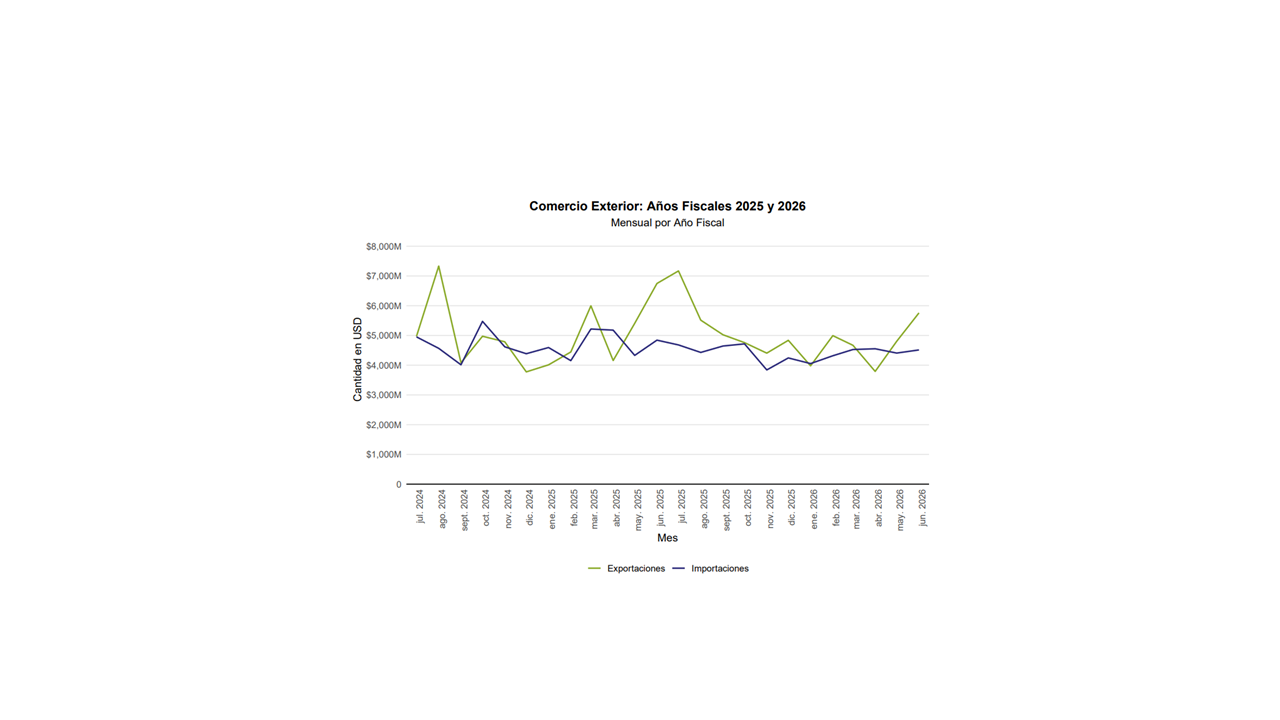
Exports represent the goods and services sent from Puerto Rico to other markets.
Analyzing this data helps to understand economic and commercial activity.
El Informe Estadístico a la Gobernadora es una iniciativa del Instituto de Estadísticas de Puerto Rico dirigida a presentar análisis estadísticos sobre temas de relevancia para Puerto Rico. A través de estos informes se examinan datos e indicadores desde diferentes contextos, disciplinas y áreas temáticas, con el propósito de aportar información objetiva y fundamentada para comprender asuntos de interés público.
Cada edición aborda una temática particular mediante el análisis, la integración y la interpretación de distintas fuentes de datos. Esta iniciativa busca fortalecer el uso de las estadísticas como herramienta para la toma de decisiones, la formulación de política pública y el análisis de la realidad económica y social de Puerto Rico.
Para esta edición, se desarrolló sobre la temática de comercio exterior - año fiscal 2026. A continuación algunas estadísticas destacadas del informe:
Durante el año fiscal 2026, Puerto Rico registró un superávit comercial de $6,775,075,992. Un incremento del 55.61 % en comparación con el superávit obtenido en el año fiscal 2025, que fue de $4,353,983,618.
Exportaciones e Importaciones Totales año fiscal 2026:
Para mayor información y descarga del informe, puede acceder al siguiente enlace: https://www.estadisticas.pr.gov/productos/informe-estadistico-a-la-gobernadora
The Puerto Rico Institute of Statistics continues to expand its communication channels to bring data to more people.
Through its podcast, the Institute provides a space to share accurate information, analysis, and conversations that help better understand the reality of Puerto Rico and make informed decisions.
This content is also available on Spotify, adding a new way to access reliable statistical information, wherever you are.
Search for and follow the Puerto Rico Institute of Statistics podcast on Spotify.
The data that moves Puerto Rico, closer to you than ever.
Watch reel at: https://www.facebook.com/reel/2126770324944865.
Please let us know your satisfaction level with our services.
Visit our Official Activities, and participate with us
Visit our Calls for applications and be part of the new opportunities we have for you.
If you have any questions or just want to contact us, visit the Contact Us section.
We are at your disposal. If you need custom statistics, do not hesitate to contact us.
Sign up for our online workshops. Connect with the experts and discover the power of data!
Visit our Blog and keep up to date with the latest news and topics of interest.
Visit our Press Releases and stay connected to the Institute.
Explore the Publication Calendar and keep up to date with Puerto Rico's statistics.
Complete the form for the selection of our Statistics Coordination Committee
Suscribe to receive news directly to your email.
Listen to the Official PRIS podcast and stay informed with the experts

.png)
.png)
.png)
.png)

-p-130x130q80.png)
.png)
.png)
.png)
.png)
.png)
.png)
.png)
.png)
.png)
.png)
.png)