
A lack of interpreters and trained staff are among the communication barriers facing the Deaf community
69% of those who evaluated their communication experience in healthcare services rated it as fair or poor.
The Puerto Rico Institute of Statistics presented the results of the Registry and Study of Needs of the Deaf Community in Puerto Rico for the period of January 13 to July 24, 2026. The results underscore the importance of having sign language interpreters and trained staff to facilitate this population's access to essential services. According to the report, 89% of those who responded to the needs questionnaire indicated they had visited a hospital, clinic, or doctor's office within the last year. Among the issues noted when evaluating communication in these settings were the lack of interpreters and the absence of trained staff.
Likewise, when asked what they primarily need when attending an appointment at a government office or healthcare service, respondents mentioned the need for trained staff, the availability of in-person interpreters, and the provision of forms accessible to the Deaf.
“These findings allow us to identify concrete needs to continue strengthening the accessibility of services received by the Deaf or hard-of-hearing community. Having trained staff, sign language interpreters, and accessible communication tools can make a significant difference in people's experiences and their ability to receive the guidance and services they need,” said the Institute of Statistics' executive director, Dr. Orville M. Disdier.
Key findings include:
• 89% indicated they had visited a hospital, health clinic, or doctor's office within the last year.
• 71% reported using hearing aids or a cochlear implant.
• 69% of those who evaluated their communication experience in healthcare services rated it as fair or poor.
• 67% of those who responded to the Registry indicated they have been deaf since birth.
• 62% indicated they are not currently employed.
• 61% noted they do not have access to video relay services.
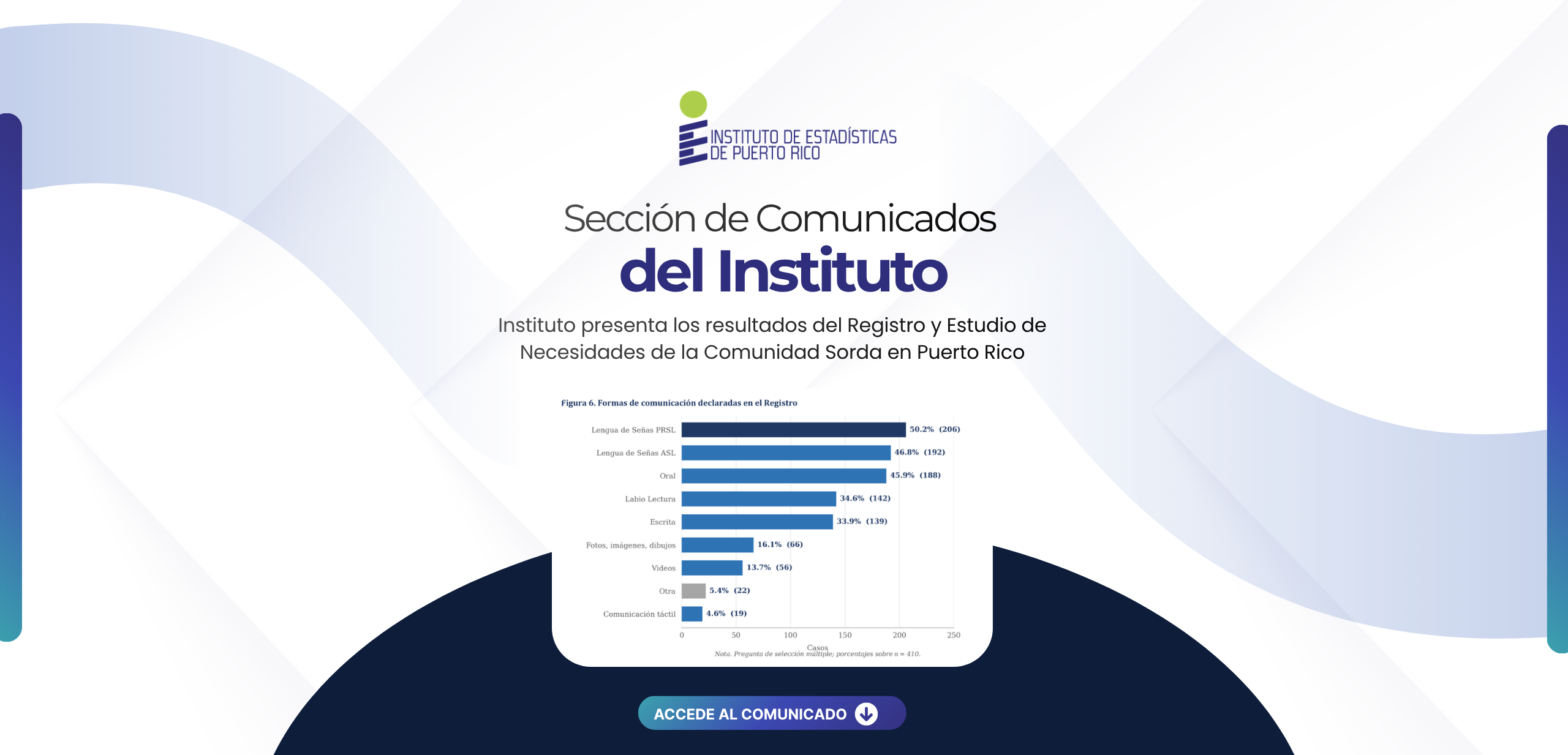
• Puerto Rican Sign Language and American Sign Language accounted for 398 mentions among the forms of communication used by those enrolled in the Registry.
The results are part of the official report prepared by the Institute in compliance with Executive Order OE-2026-002, issued by Governor Jenniffer González Colón. The document was submitted to the governor on August 12, 2026, as requested and established in the executive order.
The executive order tasked the Institute, in collaboration with various government agencies and entities, with making a formal effort to collect information on the Deaf community in Puerto Rico, including its characteristics, particularities, and forms of communication. As part of this mandate, the Institute developed two components: the Registry of Deaf Persons in Puerto Rico and the Needs Questionnaire for the Deaf Community. This builds upon the effort previously undertaken by the Institute, which culminated in the First Study of Needs of the Deaf Community in Puerto Rico, published on July 21, 2022, and available on the Institute's website.
During the analyzed period, the Registry received 803 entries, 410 of which met the established inclusion criteria. For its part, the Needs Questionnaire reached 103 processed responses.
“Understanding how this population communicates and what their needs are is fundamental to guiding decision-making and developing initiatives that respond to their reality. This effort provides us with a foundation to continue expanding the available information and promoting increasingly accessible services,” added Disdier.
“These results describe the characteristics and experiences of the people who participated voluntarily. While they should not yet be used to make estimates for the entire Deaf community in Puerto Rico or for comparisons between municipalities, they do allow us to begin formulating public policy. In this sense, we recommend expanding the project's scope, strengthening the collaboration of the agencies involved, developing a municipal outreach plan, and continuing to collect and expand the data,” explained Joselyn Santiago, one of the study's lead authors.
Although the executive order has expired, the Institute will continue to expand and update the Registry and the Needs Questionnaire until at least the end of December 2026. This will allow for the inclusion of more participants, increased geographic representation, and the strengthening of available information to continue supporting the development of public policies and services aimed at the Deaf community.
“This effort is only the beginning, as we will continue to strengthen and expand both the registry and the needs study. At the Institute, we will continue to seek the necessary resources to allow us to reach more people within the Deaf communities who wish and need to be heard and represented,” said Dr. Disdier.
The full report is available through the Puerto Rico Institute of Statistics portal at: Registry and Study of Needs of the Deaf Community in Puerto Rico.
-p-130x130q80.png)
.png)
.png)
.png)
.png)
.png)
.png)
.png)
.png)
.png)
.png)
.png)


.png)
.png)
.png)
.png)