Monthly Imports of Flowers and Buds 2025

Other
Ronald G. Hernández Maldonado
18 February 2026

Monthly imports of flowers and buds in Puerto Rico 2025

During 2025, imports of flowers and buds classified under HTS code 0603 showed monthly variations throughout the year. The highest value was recorded in February, when imports reached $1,243,389.

This pattern reflects seasonality, meaning variations that occur at specific times of the year due to recurring factors that influence commercial activity.

The disaggregation by country of origin allows us to examine the origin of the imports and their monthly distribution.

Key findings:
  • Colombia was the main country of origin in each month of the period analyzed.
  • The United States recorded increases in specific months, particularly in February, April, May, and October.
  • Ecuador reported lower monthly values compared to the other countries.

The monthly analysis makes it possible to identify temporary variations in foreign trade and better understand its behavior throughout the year.

To access more foreign trade statistics, visit the Applications section of our official portal (the use of Mozilla Firefox is recommended):
https://apps.estadisticas.pr/iepr/Publicaciones/Proyectosespeciales/ComercioExterno.aspx

Source: Puerto Rico Statistics Institute and U.S. Census Bureau.

Share this article:

Visit our Official Activities, and participate with us

Visit our Calls for applications and be part of the new opportunities we have for you.

If you have any questions or just want to contact us, visit the Contact Us section.

We are at your disposal. If you need custom statistics, do not hesitate to contact us.

Sign up for our online workshops. Connect with the experts and discover the power of data!

Visit our Blog and keep up to date with the latest news and topics of interest.

Visit our Press Releases and stay connected to the Institute.

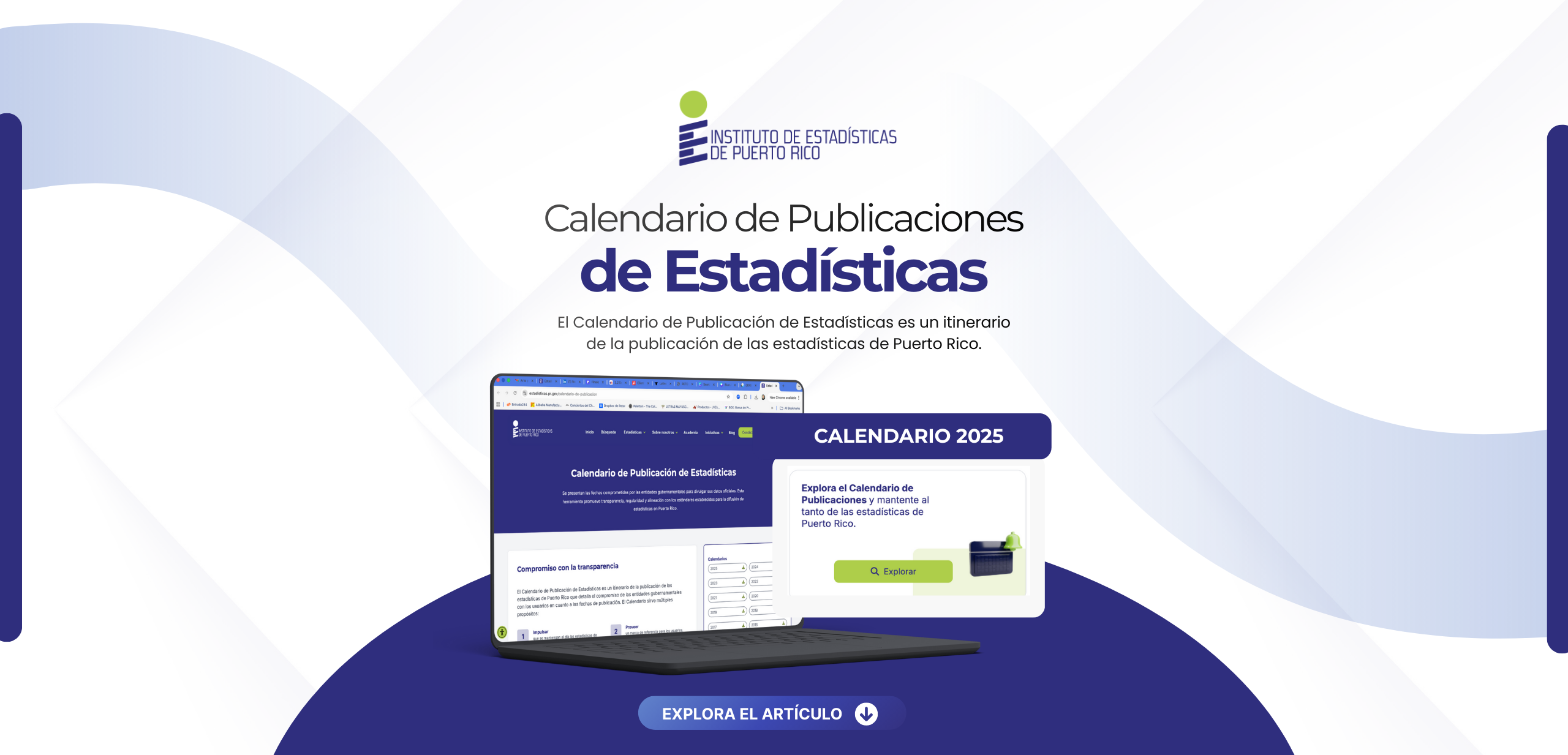
Explore the Publication Calendar and keep up to date with Puerto Rico's statistics.

Complete the form for the selection of our Statistics Coordination Committee

Suscribe to receive news directly to your email.

Listen to the Official PRIS podcast and stay informed with the experts

Transparency and Data: Understanding the Statistical Publication Schedule

Francisco J. Pesante González

Statistical Project Manager

(created with https://gemini.google.com)


In the world of data analysis and decision-making, uncertainty is our greatest enemy. Knowing what the data says is vital, but knowing when it will be available is what allows us to plan with certainty. This is where a fundamental tool for transparency in Puerto Rico comes into play: the Calendar for the publication of statistics.

What exactly is this Calendar?

In simple terms, the Statistics Release Schedule is the official itinerary that governs the publication of statistics for Puerto Rico. It's not just a list of dates; it's a document that details the formal commitment that government entities have to us, the users, about when their statistics will be made public.

This instrument is not optional. It is the duty of the Statistics Institute, enshrined in its enabling law (Act No. 209 of 2003, as amended), to establish strict schedules and ensure that government agencies comply with them.

Beyond Dates: Measuring Efficiency

The interesting thing about this Calendar is that it works as an accountability tool using specific metrics. The Institute records three key moments for evaluating performance:

  1. Reference date: when the statistical event or period occurred.
  2. Anticipated date: The day the agency committed to publishing.
  3. Date of receipt: the current day the information is made available.

From these dates, something critical called the Opportunity Interval (IO) is calculated. The IO measures the number of days that pass from when the statistic occurs until it is finally published.

Why does IoT matter? Because it serves as the basic measure of data “opportunity”. Also known as data lag, this interval directly affects how investors and economists can take advantage of information to make decisions. If we see IoT on the rise, it's a clear sign that the work processes in that unit of government need improvement.

The relevance: why do we need this Calendar?

The existence and compliance of this Calendar are vital for five main reasons:

  1. Encourages updating: urges the Government to keep its statistics up to date, allowing us to measure the regularity of publications.
  2. It empowers the user: it provides a frame of reference that ensures that we have up-to-date data, greatly facilitating the planning of our work.
  3. It guarantees continuous flow: it promotes regular and constant statistical production, supporting the management of these processes within the government.
  4. Transparency and accountability: makes data transparent and anticipated, serving as an instrument to monitor access to public information.
  5. Quality and standardization: it advances the accreditation of statistics based on quality criteria such as timeliness (shortness between the event and publication) and punctuality (lack of delay compared to what was planned).

Conclusion

The Statistical Publication Schedule is more than an administrative agenda; it is the guarantee that Puerto Rico is governed by the same data dissemination standards used by jurisdictions such as Germany, Mexico or the U.S. Census Bureau. At the end of the day, greater regularity and frequency in publication allows us to make better use of statistical information to build a better future. Access this product at: https://www.estadisticas.pr.gov/calendario-de-publicacion

 

Access the latest flu Surveillance report

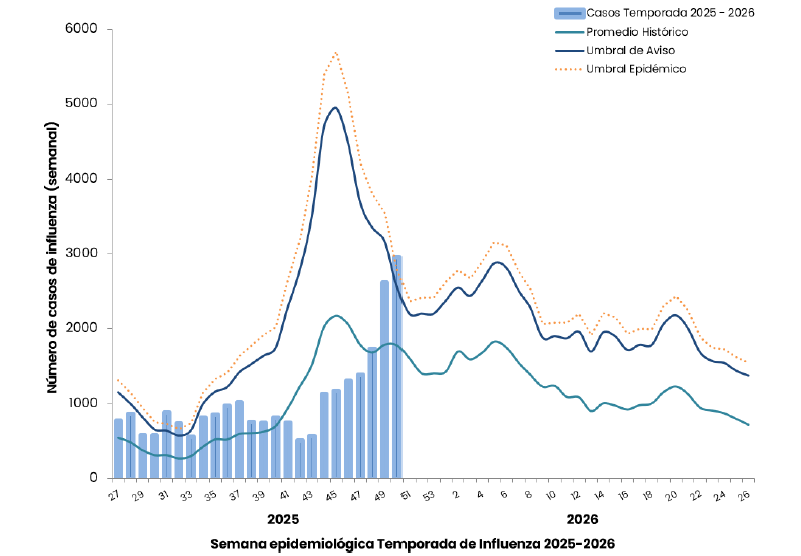
Access the latest flu Surveillance report at Flu Surveillance Report

Violence in Puerto Rico: Release of Preliminary Data and Annual Summary 2025

The Puerto Rico Violent Death Reporting System (PRVDRS), part of the Puerto Rico Institute of Statistics, presents its compendium of bulletins with preliminary data for the year 2025. This update includes the analysis of the fourth quarter (October to December) and a consolidated annual summary, presenting an overview of trends in fatal violence in the archipelago over the past year.

2025 Annual Summary

According to preliminary data, 2025 closed with a total of 732 violent deaths. Fatal violence occurs almost daily in the archipelago; in fact, violent deaths were recorded on 83% of the days of the year. With an average of 61 deaths per month, the months with the highest incidence of fatal violence were observed in January (74), June (77) and August (71).

The annual distribution of these cases is broken down as follows:

• Homicides: 471 cases (64.3%)

• Suicides: 204 cases (27.9%)

• Other circumstances: 57 cases (7.8%)

Year-End Findings (Q4)

The release of the fourth quarter data reflects important findings:

Demographic Profile: In homicides, 93% of the victims were men, with the population aged 20 to 39 being the most affected. As for suicides, 55.6% occurred in people aged 40 to 59, showing an increase compared to previous quarters.

Geography of Violence: The police areas of San Juan (10.2), Caguas (8.4) and Guayama (7.9) had the highest rates of violent deaths per 100,000 inhabitants during this period.

Common Factor: The firearm remained the main instrument, used in 92% of the homicides reported in the quarter.

Evidence for Prevention

Since the launch of the PRVDRS digital tools, it has been emphasized that understanding data is an essential step to address in an informed manner one of the most complex challenges facing Puerto Rico. The system continues to link information from the Puerto Rico Police, the Institute of Forensic Sciences and the Demographic Registry to provide a holistic view that guides the formulation of evidence-based public policy.

Public Access

We invite citizens and health and safety professionals to explore the annual newsletter and quarterly reports through our interactive news magazine:

• Digital Magazine: Newsletters: Preliminary Data 2025

• Official Portal: Violent Death Notification System