

Francisco J. Pesante González
Statistical Project Manager
(created with https://gemini.google.com)
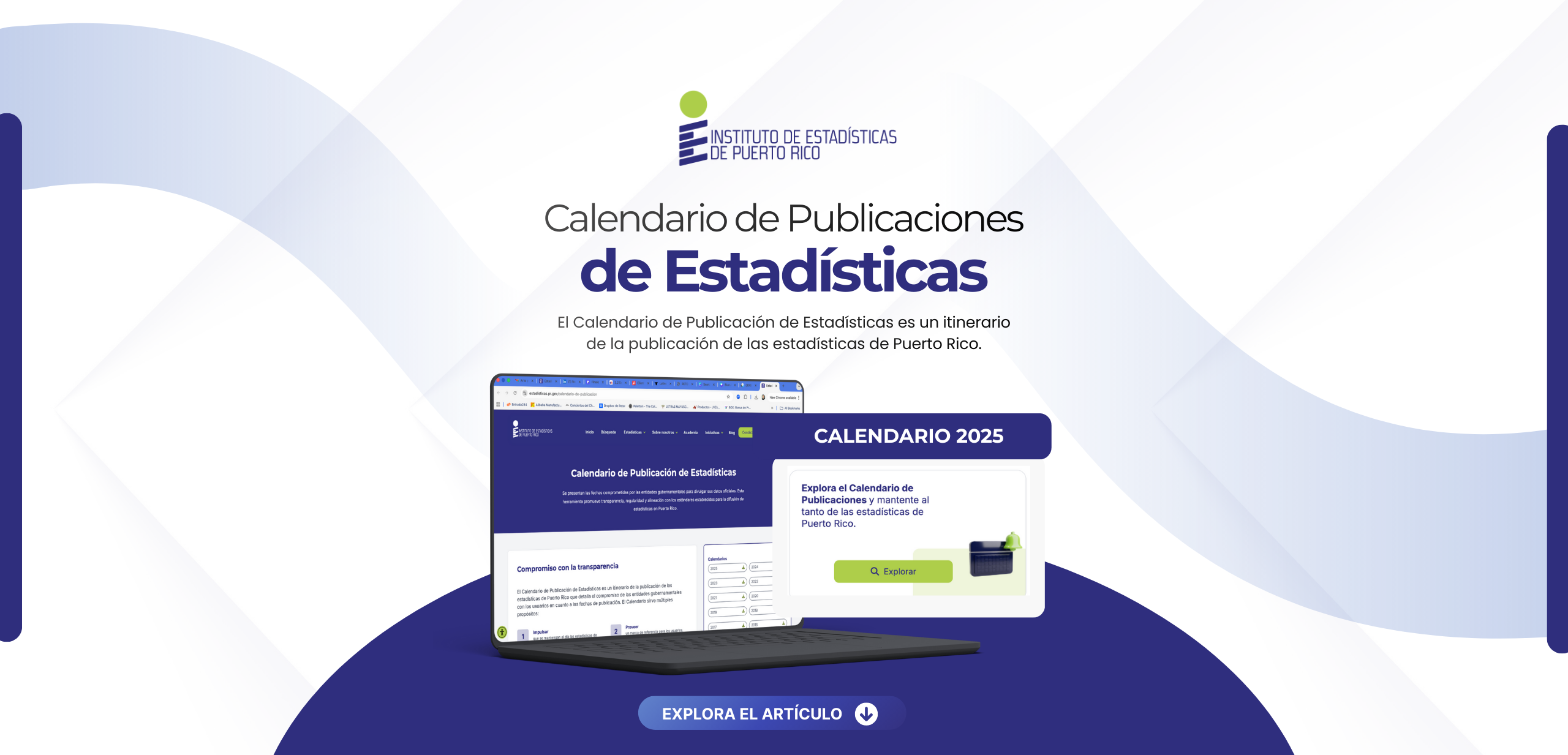
In the world of data analysis and decision-making, uncertainty is our greatest enemy. Knowing what the data says is vital, but knowing when it will be available is what allows us to plan with certainty. This is where a fundamental tool for transparency in Puerto Rico comes into play: the Calendar for the publication of statistics.
What exactly is this Calendar?
In simple terms, the Statistics Release Schedule is the official itinerary that governs the publication of statistics for Puerto Rico. It's not just a list of dates; it's a document that details the formal commitment that government entities have to us, the users, about when their statistics will be made public.
This instrument is not optional. It is the duty of the Statistics Institute, enshrined in its enabling law (Act No. 209 of 2003, as amended), to establish strict schedules and ensure that government agencies comply with them.
Beyond Dates: Measuring Efficiency
The interesting thing about this Calendar is that it works as an accountability tool using specific metrics. The Institute records three key moments for evaluating performance:
- Reference date: when the statistical event or period occurred.
- Anticipated date: The day the agency committed to publishing.
- Date of receipt: the current day the information is made available.
From these dates, something critical called the Opportunity Interval (IO) is calculated. The IO measures the number of days that pass from when the statistic occurs until it is finally published.
Why does IoT matter? Because it serves as the basic measure of data “opportunity”. Also known as data lag, this interval directly affects how investors and economists can take advantage of information to make decisions. If we see IoT on the rise, it's a clear sign that the work processes in that unit of government need improvement.
The relevance: why do we need this Calendar?
The existence and compliance of this Calendar are vital for five main reasons:
- Encourages updating: urges the Government to keep its statistics up to date, allowing us to measure the regularity of publications.
- It empowers the user: it provides a frame of reference that ensures that we have up-to-date data, greatly facilitating the planning of our work.
- It guarantees continuous flow: it promotes regular and constant statistical production, supporting the management of these processes within the government.
- Transparency and accountability: makes data transparent and anticipated, serving as an instrument to monitor access to public information.
- Quality and standardization: it advances the accreditation of statistics based on quality criteria such as timeliness (shortness between the event and publication) and punctuality (lack of delay compared to what was planned).
Conclusion
The Statistical Publication Schedule is more than an administrative agenda; it is the guarantee that Puerto Rico is governed by the same data dissemination standards used by jurisdictions such as Germany, Mexico or the U.S. Census Bureau. At the end of the day, greater regularity and frequency in publication allows us to make better use of statistical information to build a better future. Access this product at: https://www.estadisticas.pr.gov/calendario-de-publicacion
-p-130x130q80.png)
.png)
.png)
.png)
.png)
.png)
.png)
.png)
.png)
.png)
.png)
.png)


.png)
.png)
.png)
.png)