Be part of our
Team
job posting for:
Administrative Assistant
Join and be a fundamental part of the team that promotes the
statistics in Puerto Rico.



Be part of our
Team
job posting for:
Administrative Assistant
Join and be a fundamental part of the team that promotes the
statistics in Puerto Rico.
Please let us know your satisfaction level with our services.
Visit our Official Activities, and participate with us
Visit our Calls for applications and be part of the new opportunities we have for you.
If you have any questions or just want to contact us, visit the Contact Us section.
We are at your disposal. If you need custom statistics, do not hesitate to contact us.
Sign up for our online workshops. Connect with the experts and discover the power of data!
Visit our Blog and keep up to date with the latest news and topics of interest.
Visit our Press Releases and stay connected to the Institute.
Explore the Publication Calendar and keep up to date with Puerto Rico's statistics.
Complete the form for the selection of our Statistics Coordination Committee
Suscribe to receive news directly to your email.
Listen to the Official PRIS podcast and stay informed with the experts

Source: Centers for Disease Control and Prevention, National Center for Chronic Disease Prevention and Health Promotion, Division of Population Health. BRFSS Prevalance and Trends Data [online]. 2025. [accessed Wed, 04 Mar 2026 17:40:15 GMT].
URL: https://www.cdc.gov/brfss/brfssprevalence.
Graphic: Puerto Rico Institute of Statistics.
Note: Adults 18 years of age or older.
-----
Today, March 4th, World Obesity Day, is an opportunity to reflect on a public health challenge that continues to grow in many parts of the world, including Puerto Rico.
According to data from the Behavioral Risk Factor Surveillance System (BRFSS), the prevalence of obesity in Puerto Rico shows an upward trend over the last decade among adults aged 18 and over, going from 26.3% in 2011 to 36.2% in 2024.
The Puerto Rico Institute of Statistics promotes access to information that allows us to better understand the challenges we face as a society and to support informed decision-making.
On World Obesity Day, we're sharing this graphic to promote informed conversation and analysis of available data.
Learn more about this day at: https://www.worldobesityday.org

Puerto Rico Institute of Statistics Presents Statistics on Pulmonary Hypertension in Puerto Rico
Dr. Idania R. Rodriguez Ayuso, Deputy Executive Director of the Institute of Statistics, was a speaker at the Pulmonary Hypertension Support Group meeting. During her presentation, she presented the first statistics of pulmonary hypertension in Puerto Rico.
The results indicate that in 2024, 6,193 unique cases of pulmonary hypertension were registered: 69% in women and 31% in men. The prevalence was higher in people over 60 years of age and in the Southwest ASES region (178 cases per 100,000 inhabitants).
Access a copy of the presentation: Pulmonary Hypertension in Puerto Rico
El Informe Estadístico a la Gobernadora es una iniciativa del Instituto de Estadísticas de Puerto Rico dirigida a presentar análisis estadísticos sobre temas de relevancia para Puerto Rico. A través de estos informes se examinan datos e indicadores desde diferentes contextos, disciplinas y áreas temáticas, con el propósito de aportar información objetiva y fundamentada para comprender asuntos de interés público.
Cada edición aborda una temática particular mediante el análisis, la integración y la interpretación de distintas fuentes de datos. Esta iniciativa busca fortalecer el uso de las estadísticas como herramienta para la toma de decisiones, la formulación de política pública y el análisis de la realidad económica y social de Puerto Rico.
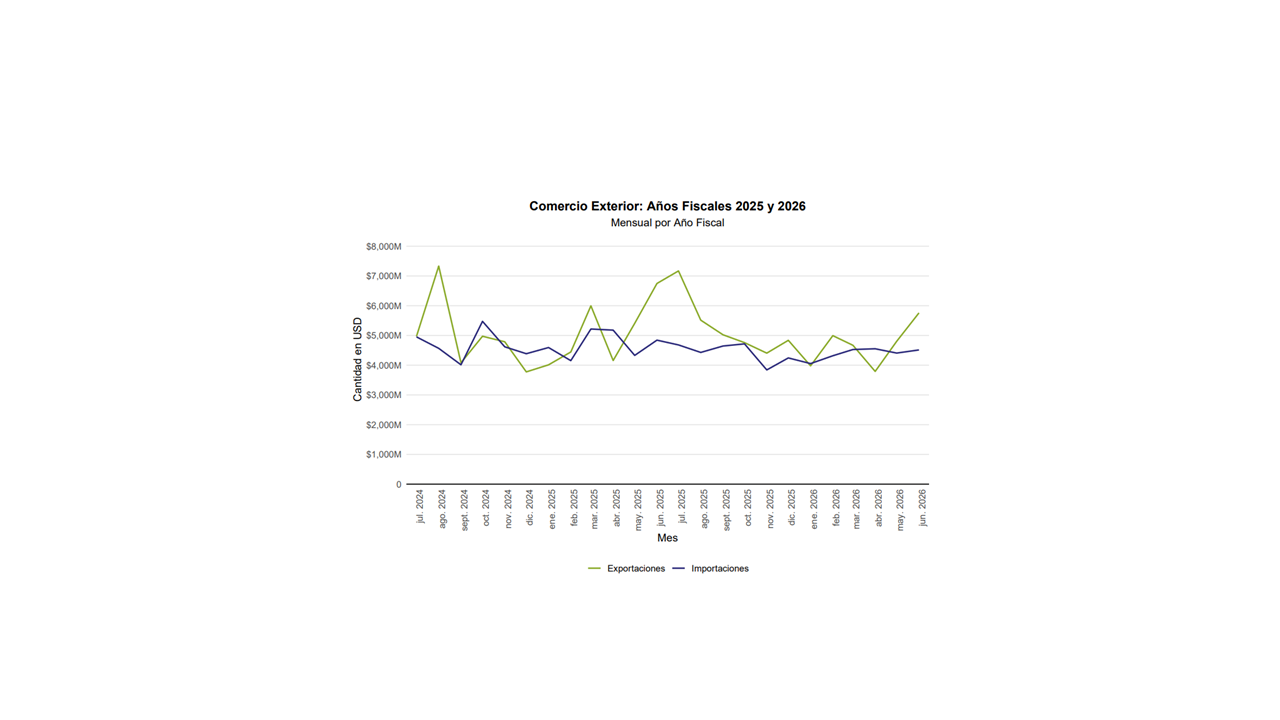
Para esta edición, se desarrolló sobre la temática de comercio exterior - año fiscal 2026. A continuación algunas estadísticas destacadas del informe:
Durante el año fiscal 2026, Puerto Rico registró un superávit comercial de $6,775,075,992. Un incremento del 55.61 % en comparación con el superávit obtenido en el año fiscal 2025, que fue de $4,353,983,618.
Exportaciones e Importaciones Totales año fiscal 2026:
Para mayor información y descarga del informe, puede acceder al siguiente enlace: https://www.estadisticas.pr.gov/productos/informe-estadistico-a-la-gobernadora

.png)
.png)
.png)
.png)

-p-130x130q80.png)
.png)
.png)
.png)
.png)
.png)
.png)
.png)
.png)
.png)
.png)
.png)