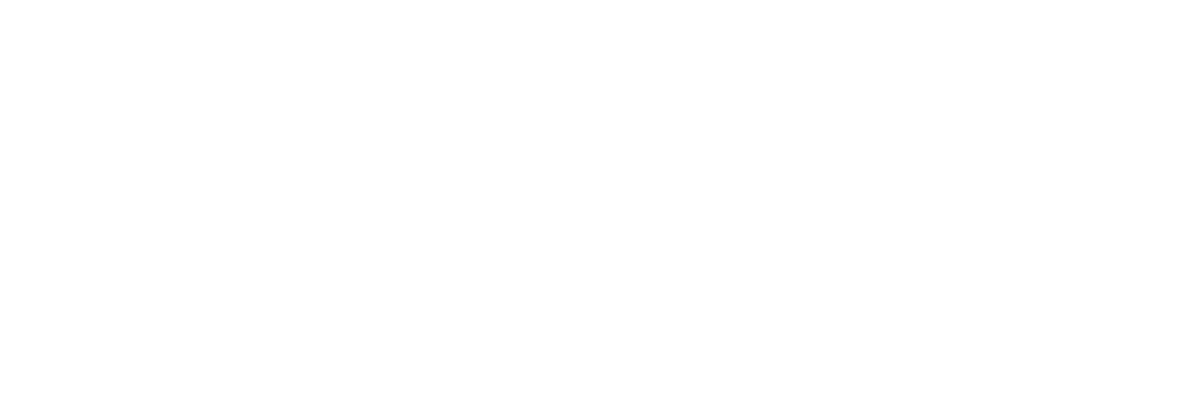


Some variables are easier to measure than others, but certain questions require special care, both in how they are formulated and in the instruments are used to collect them. One of the most complex is without a doubt, that related to people's ethnic and cultural origin, and also the skin color. In the most recent newsletter of the Puerto Rico State Data Center (SDC-PR) network brief notes are shared about the research on ethnic-racial identification and colorism that has been carried out from the Institute's. Access the current newsletter here, or explore previous newsletters and press releases from the SDC-PR network.

PRESS RELEASE
OFFICE OF THE ACTING EXECUTIVE DIRECTOR
Data from the World Values Survey for Puerto Rico revealed
54% of people do not leave their house at night as a security measure
In Puerto Rico, family is the most important aspect (94%), followed by work (70%), free time (66%) and religion (65%). These are some of the data reflected in the recent World Values Survey for Puerto Rico carried out by a team of professors and students from the University of the Sacred Heart, led by Dr. Javier Hernández, director of the Department of Business Administration of Sagrado, and supported by the Institute of Statistics of Puerto Rico. The study was revealed at the Forum and presentation on the World Values Survey for Puerto Rico 2018, at the Sacred Heart University, where a panel of renowned experts in different areas analyzed and commented on the results.
The World Values Survey is an instrument that allows the development of statistics on the ethical, social, economic and political values of Puerto Ricans, as well as the assessment of their daily lives, civic and governmental institutions, and their connection with the world of work, their families and their communities. This survey provides an opportunity to address the nature of social capital in Puerto Rico vis-a-vis the rest of the world and, therefore, to know what the people are prepared to do and what they need to plan their development as a social, economic and cultural collective.
One of the relevant data from this study points out that the majority of people in Puerto Rico (91%) consider themselves quite happy or very happy. However, despite the fact that 85% understand that their neighborhood is very safe or quite safe, 71% avoid carrying a lot of cash and 54% do not leave their house at night, as a security measure. On the other hand, only a minority thinks that most people can be trusted (18%).
The study also reveals that a majority has no interest in politics (52%) and would not vote for any political party and only for independent candidates (54%). In 2001, the percentage that showed no interest in politics represented 28%.
For the lead author of the study, Dr. Javier Hernández, “The World Values Survey is a valuable tool that will allow us to compare results with over 60 countries. It is part of the efforts to make Puerto Rico part of the main international indicators and to support institutional decision-making. The survey addresses issues of great relevance to the government, academia, the third sector and civil society, so we invite all sectors to analyze their results.”
“The return of Puerto Rico to the World Values Survey represents an important effort, since it allows us to continue with the recommendation of the Institute of Statistics to make Puerto Rico part of the main indicators at the global level. In the same way, this project represents a vital source of information to contribute to the culture of evidence-based decision-making. This is valuable information about our values, beliefs and political culture, among other information, necessary to guide public policy decisions. The survey results have a multisectoral scope, which is key for different levels of government, the non-governmental sector and the academy,” said Dr. Orville M. Disdier, acting executive director of the Puerto Rico Institute of Statistics.
The Sacred Heart University, established in 1880 by the religious order of the Society of the Sacred Heart of Jesus, is a Catholic, private, non-profit institution that promotes a unique and innovative educational project in an environment characterized by excellent community life. The University offers associate degrees, baccalaureates, combined degrees, master's degrees, post-baccalaureate certificates and collaborative agreements with other universities in and outside of Puerto Rico. The academic offer focuses on the areas of Business Administration, Natural Sciences, Communication, Nursing and Humanities-Social Sciences.
The Puerto Rico Statistics Institute is an autonomous governmental entity responsible for coordinating the Government's statistical production service to ensure that the data collection and statistics systems, on which public policies are based, are complete, reliable, and have quick and universal access.
For more information or to access the 2018 World Values Survey for Puerto Rico you can visit the website: https://estadisticas.pr.gov/ or through the social networks of Facebook (@estadisticas .pr), Twitter (@EstadisticasPR) and LinkedIn (Institute of Statistics of Puerto Rico).
##
Press Contacts:
Lourdes Burgos/787-562-2932/ lburgos@upfrontpr.net
Idia Martinez/787-603-3200/ imartinez@upfrontpr.net
PRESS RELEASE
OFFICE OF THE ACTING EXECUTIVE DIRECTOR
Results from the first food safety study in Puerto Rico presented
Under the name Puerto Rico Food Security Survey 2015, and in collaboration with the Behavioral Risk Factor Surveillance System (Behavioral Risk Factor Surveillance, BRFSS) administered in Puerto Rico by the Department of Health, the Puerto Rico Statistics Institute (Institute) presented the results of the first study on this topic to be carried out in Puerto Rico. The BRFSS is a continuous epidemiological surveillance system that is carried out in collaboration with the Centers for Disease Control and Prevention (CDC) in the United States and its jurisdictions, including Puerto Rico. The study population was adults aged 18 and over and the response rate in Puerto Rico was 71.1%, placing us among the top 25 jurisdictions with the highest participation. According to the United Nations Food and Agriculture Organization, food insecurity is a key factor that complements the undernourishment indicator and makes it possible to improve the characterization of hunger.
“The large amount of food imported into Puerto Rico, among other aspects, makes the population more vulnerable to food insecurity. This is why it is essential to know the statistics related to this aspect, as well as the risk behaviors, morbidities and health practices of vulnerable populations,” said the Institute's acting executive director, Dr. Orville M. Disdier.
From the most relevant data from this study, it is estimated that 33% of the population aged 18 and over in Puerto Rico were food insecure. Similarly, 21.7% of the people interviewed indicated that, in the 12 months before the study, there were times when they had to serve themselves less food or stop eating one of their daily meals due to lack of money. A quarter of these (25.8%) did so almost every month.
The study also revealed, among others, that the Arecibo region had the highest percentage of food insecurity with 40.6%, while the metropolitan area and Ponce were the regions with the lowest food insecurity with 31.8% and 31.4% respectively. 44.3% of food-insecure people perceived their health as regular or poor. This percentage was higher in women (47.6%) compared to men (38.7%). People diagnosed with a depressive disorder were 2.7 times more likely to belong to the food-insecure group than people who had not been diagnosed with a depressive disorder.
“One of the most revealing results is related to poverty and its impact on food insecurity. The study concluded that people with an income of less than $25,000 are 3.3 times more likely to belong to the food insecure group than people with an income of $25,000 or more,” said Myribel Santiago, Project Manager of the Institute and lead author of the study.
The Puerto Rico Statistics Institute is an autonomous entity, created by Act No. 209 of August 28, 2003, as amended, in order to promote changes in the systems for the collection and analysis of the information that is generated, so that it is complete, reliable and has quick and universal access. The Puerto Rico Statistics Institute is responsible for establishing criteria and standards for the collection and analysis of information from government agencies, and for supporting those private sectors that are interested in demonstrating and giving public evidence of the objectivity of statistical data. To access the study you can visit Publications.
###
Contact: Lourdes Burgos, R-27
lburgos@upfrontpr.net 787-562-2932
PRESS RELEASE
OFFICE OF THE ACTING EXECUTIVE DIRECTOR
Statistical Yearbook of the Education System 2015-2016 has been published
Study reflects decrease in the prevalence of bullying at school among girls
The Puerto Rico Statistics Institute (Institute) published the statistical profile of Puerto Rico's education system for the academic year 2015-2016. The report includes data and information on all levels of education (pre-primary, primary, secondary, post-secondary, and university), both for the public and private sectors.
For the segment that groups the pre-primary, primary and secondary levels, the study highlights that in the public system the number of schools decreased from 1,386 to 1,332; students decreased from 410,950 to 379,818; teachers increased from 31.186 to 31,993 and the student-to-teacher ratio decreased from 13.2 to 11.9. 51.1% of the students were male, and the number of students in special education decreased from 129,086 to 123,376. While for the private system the number of schools decreased from 853 to 795 and the number of students decreased from 144,034 to 142,235; the number of teachers decreased from 11,645 to 11,536. 50.7% of the students were male, the number of students in special education increased from 15,828 to 16,462, and the student-to-teacher ratio increased from 12.2 to 12.3.
The new Measurement and Evaluation for Academic Transformation tests, better known as the META, began to be implemented in the public sector in the academic year 2015-2016; these revealed that 45% and 51% of all students in the public sector were proficient in English and Spanish subjects, respectively, while in mathematics only 33% were proficient. Regarding the results of the Academic Achievement Tests, known as Learn Aid and taken by students from the private sector, they revealed that between 62% and 67% of students in all grades, in the private system, were proficient in the subjects of Spanish, English, non-verbal reasoning and mathematics.
Regarding the average scores obtained in the University Assessment and Admission Tests, tests known as the College Board, the results showed that, in the public and private sectors, the subject with the highest score was English, with 443 and 552, respectively. It should be noted that, for all subjects, including verbal and mathematical reasoning, students in the private sector scored higher compared to the public sector.
This statistical profile also revealed that the results of the Youth Risk Behavior Surveillance System, related to bullying, demonstrate a decrease in the prevalence of Bullying towards girls in public schools from 13.4% (2013) to 10.5% (2015).
“Achieving a statistical profile of the entire educational system in Puerto Rico, including data from both the public and private systems, requires multiple sources of information with methodologies and publication dates that vary widely from each other. It is for these reasons, among others, that this type of product is usually referred to two or three years prior to the current year. But despite this, this Statistical Yearbook is the only product in Puerto Rico that presents a standardized reference framework that contrasts with previous years and provides projections for the future, as far as education statistics are concerned,” explained Dr. Orville M. Disdier, Acting Executive Director of the Institute and lead author of the report.
The Puerto Rico Statistics Institute is an autonomous governmental entity responsible for coordinating the Government's statistical production service to ensure that the data collection and statistics systems, on which public policies are based, are complete, reliable, and have quick and universal access.
For more information or to access the statistical profile of Puerto Rico's education system for the academic year 2015-2016, you can visit the website: Publications or through the social networks of Facebook (@estadisticas .pr), Twitter (@EstadisticasPR) and LinkedIn (Institute of Statistics of Puerto Rico).
##
Press Contact:
Idia Martínez
787-603-3200 imartinez@upfrontpr.net
To add a new paragraph (l), and to redesignate the current paragraph (l), as (m), in Article 8 of Law 76‐2013, known as the “Law of the Attorney for the Elderly of Puerto Rico”, in order to add new functions and duties to the Office of the Attorney for the Elderly, in response to the dramatic increase in grandparents raising grandchildren; and for other related purposes.
PRESS RELEASE
OFFICE OF THE ACTING EXECUTIVE DIRECTOR
PUERTO RICO STATISTICS INSTITUTE AND FEDERAL ENTITY SHARE IDEAS TO IMPROVE THE COACH TRAINING PROJECT IN THE DEPARTMENT OF EDUCATION
San Juan, Puerto Rico, April 8, 2019 — Dr. Orville M. Disdier, Acting Executive Director of the Puerto Rico Institute of Statistics (Institute) participated in the first meetings this year of the Board of Directors of the Regional Educational Laboratory of the North East & Islands (REL‐NEI), an entity subsidized by the Federal Department of Education. Disdier, who has been a member of the Board of Directors of that organization for some years, reported that during the day, initiatives of great importance for the island were discussed, including Puerto Rico Data Coaches Training, an innovative project that is forming Coaches, within the Department of Education.
“This project is of great importance to the Department of Education because it is through these Coaches, barriers are being identified that may be impeding the development of a culture based on data and removing such barriers. During the meetings with REL‐NEI, we discussed options to continue improving this project,” Disdier explained.
The REL‐NEI's main objective is to carry out scientific research and training aimed at supporting education systems based on empirical evidence. The REL‐NEI translates this empirical evidence into public policy proposals and best practices in teaching and learning processes. REL‐NEI is one of 10 Regional Laboratories and is comprised of Puerto Rico, Connecticut, Maine, Massachusetts, New Hampshire, New York, Rhode Island, U.S. Virgin Islands, and Vermont.
Other topics that were addressed and discussed at the meetings were the development of the workforce at the preschool level, learning the English language, effective alternatives to traditional graduation processes, reducing chronic absenteeism, and geospatial analysis to understand barriers to teacher recruitment.
“The mission of the institute is not only to coordinate the production service of the statistics produced in Puerto Rico, but also to promote research capacity and unite academics, researchers and public officials to objectively support government management, in this case, the management of Puerto Rico's public education system. As the official institution in Puerto Rico for the promotion of a data culture, at the Institute we are available to provide our full support to these data coaches from the Department of Education,” explained Dr. Disdier.
Although researchers and academics from the Laboratory for Educational Research and Development (WestEd) and the Education Development Center (EDC) direct most of the research and projects, they work as a team and in collaboration with the governments of all the jurisdictions that make up the REL‐NEI. The Puerto Rico Department of Education and the Institute are an integral part of these efforts. During this and the coming years, the results of these investigations will be announced.
For more information about the REL‐NEI you can visit the following address: https://ies.ed.gov/ncee/edlabs/regions/northeast/. For their part, they can access data and information at the Institute of Statistics through https://estadisticas.pr.gov/.
XXX
Contact: Idia Martínez
Mobile phone: 787-603-3200
Email: imartinez@upfrontpr.net
To order the Integrated Development Commission of the Western Region of the Puerto Rico House of Representatives to carry out a comprehensive study on street food trucks in Western Puerto Rico, which must include an analysis of the state and municipal regulations that currently apply to this type of business and the feasibility of standardizing the matter in a single statute.
Please let us know your satisfaction level with our services.
Visit our Official Activities, and participate with us
Visit our Calls for applications and be part of the new opportunities we have for you.
If you have any questions or just want to contact us, visit the Contact Us section.
We are at your disposal. If you need custom statistics, do not hesitate to contact us.
Sign up for our online workshops. Connect with the experts and discover the power of data!
Visit our Blog and keep up to date with the latest news and topics of interest.
Visit our Press Releases and stay connected to the Institute.
Explore the Publication Calendar and keep up to date with Puerto Rico's statistics.
Complete the form for the selection of our Statistics Coordination Committee
Suscribe to receive news directly to your email.
Listen to the Official PRIS podcast and stay informed with the experts

.png)
.png)
.png)
.png)

-p-130x130q80.png)
.png)
.png)
.png)
.png)
.png)
.png)
.png)
.png)
.png)
.png)
.png)