Conference “Communication and Data Dissemination Strategies”

Announcements
IEPR
09 April 2026

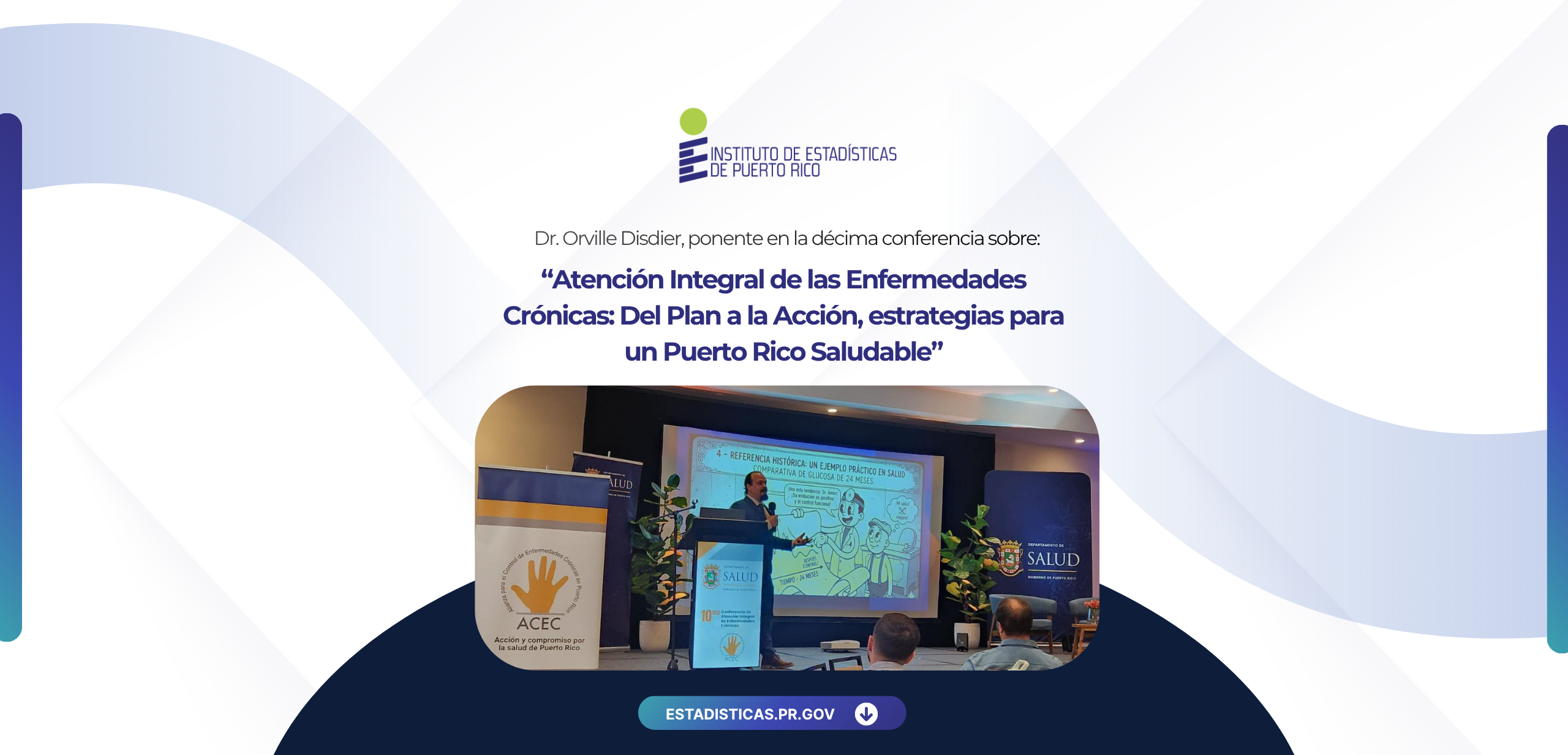
Dr. Orville M. Disdier, Executive Director of the Puerto Rico Institute of Statistics, was one of the speakers at the tenth conference on “Comprehensive Care for Chronic Diseases: From Plan to Action, Strategies for a Healthy Puerto Rico”.

In his presentation entitled “Data Communication and Dissemination Strategies”, Disdier emphasized the need for accurate and timely data to transform uncertainty into effective public policies.

Access a copy of the presentation at: https://drive.google.com/file/d/1s4kTRG7sKeevD4U-CV8w0_MYBdMsqumf.

Share this article:

Please let us know your satisfaction level with our services.

‍

Visit our Official Activities, and participate with us

Visit our Calls for applications and be part of the new opportunities we have for you.

If you have any questions or just want to contact us, visit the Contact Us section.

We are at your disposal. If you need custom statistics, do not hesitate to contact us.

Sign up for our online workshops. Connect with the experts and discover the power of data!

Visit our Blog and keep up to date with the latest news and topics of interest.

Visit our Press Releases and stay connected to the Institute.

Explore the Publication Calendar and keep up to date with Puerto Rico's statistics.

Complete the form for the selection of our Statistics Coordination Committee

Suscribe to receive news directly to your email.

Listen to the Official PRIS podcast and stay informed with the experts

Public Hearing “Protecting, Managing and Preserving Digital Evidence in Criminal Cases”

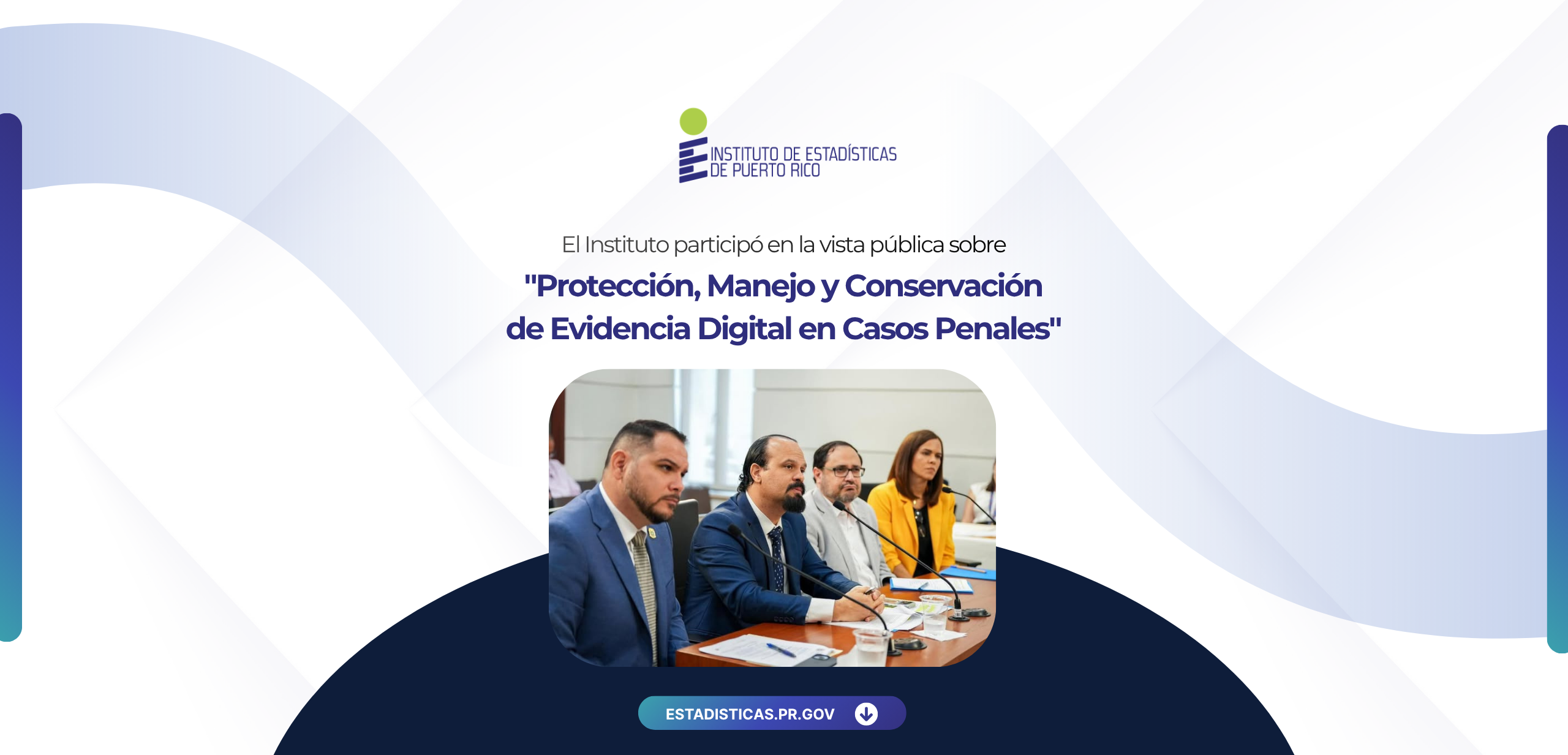
The Institute participated in the public hearing on “Protecting, Managing and Preserving Digital Evidence in Criminal Cases”.

From the Institute's perspective, the regulation of digital evidence in criminal proceedings must explicitly incorporate a statistical and data governance approach that strengthens the quality, integrity, traceability and availability of the information that underpins judicial and public policy decision-making.

The Institute recognizes the relevance of the proposed issues and supports the development of a legal framework that, in addition to establishing substantive obligations, enables the generation of indicators, standardized administrative records and interoperable systems to monitor the performance of the criminal justice system in terms of digital evidence, while respecting the principles of confidentiality, protection of personal data and fundamental rights.

Access the explanatory memorial: https://www.estadisticas.pr.gov/blogposts/memorial-explicativo-para-la-vista-publica-proteccion-manejo-y-conservacion-de-evidencia-digital-en-casos-penales

Collaboration Agreement with the American Red Cross Puerto Rico Chapter

We are thrilled and excited about the signing of the collaboration agreement between the Puerto Rico Institute of Statistics and the American Red Cross Puerto Rico Chapter! This partnership will provide us with access to valuable information that will further strengthen our planning and decision-making processes during disasters and emergencies.

Representing the Institute were Executive Director Dr. Orville Disdier and Deputy Executive Director Dr. Idania Rodríguez. Representing the American Red Cross Puerto Rico Chapter were Regional Executive Lee Vanessa Feliciano and Regional Disaster Officer Joseph Guzmán.

Podcast “Let's Talk About Business”

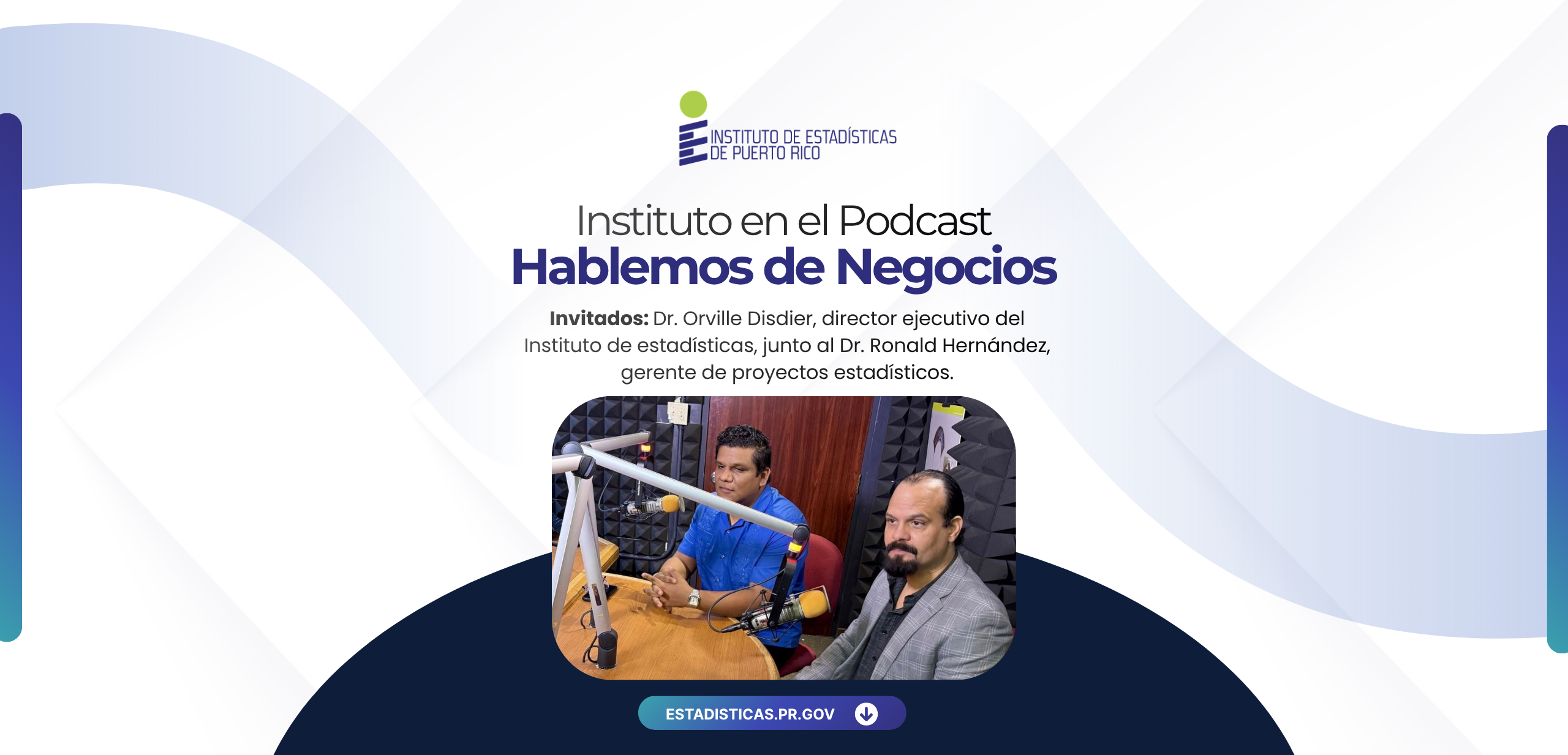
In the podcast Let's Talk About Business, Dr. Orville Disdier, executive director of the Puerto Rico Institute of Statistics, together with Dr. Ronald Hernández, manager of statistical projects, addressed various topics about the role of statistics in making informed decisions.

Among these issues, they highlighted one of the most debated — and often misinterpreted — concepts, inequality.

In a simple way, they describe it as the distance between those who have greater and lower purchasing power within a society. The larger that gap, the greater the inequality. In the case of Puerto Rico, they pointed out that, although not all people live in poverty, there is a significant difference between the extremes. Even if the group with the highest purchasing power is small, its impact on measurement is large due to this marked difference.

Why does it matter to understand this?

Because inequality is not just an economic fact. It is linked to social factors such as access to education, opportunities and even social tensions that can arise when the gaps are very wide.

In addition, the doctors emphasized that correctly interpreting these data makes it possible to better evaluate initiatives—such as economic aid or public policies—that seek to reduce this gap.

In short:

Understanding inequality is key to making informed decisions and building a more equitable society. We share the interview for the benefit of all and so that they can expand on these and other topics.

Access the interview: https://open.spotify.com/episode/5WDAUhFpJY9PKoQFoLmPV1?si=CtZVKuCKRMSg0h793ZbeGQ&pi=-e_fQ8PaS9WJi&t=17