
Collaboration Agreement with the American Red Cross Puerto Rico Chapter

Announcements
IEPR
14 July 2026

We are thrilled and excited about the signing of the collaboration agreement between the Puerto Rico Institute of Statistics and the American Red Cross Puerto Rico Chapter! This partnership will provide us with access to valuable information that will further strengthen our planning and decision-making processes during disasters and emergencies.

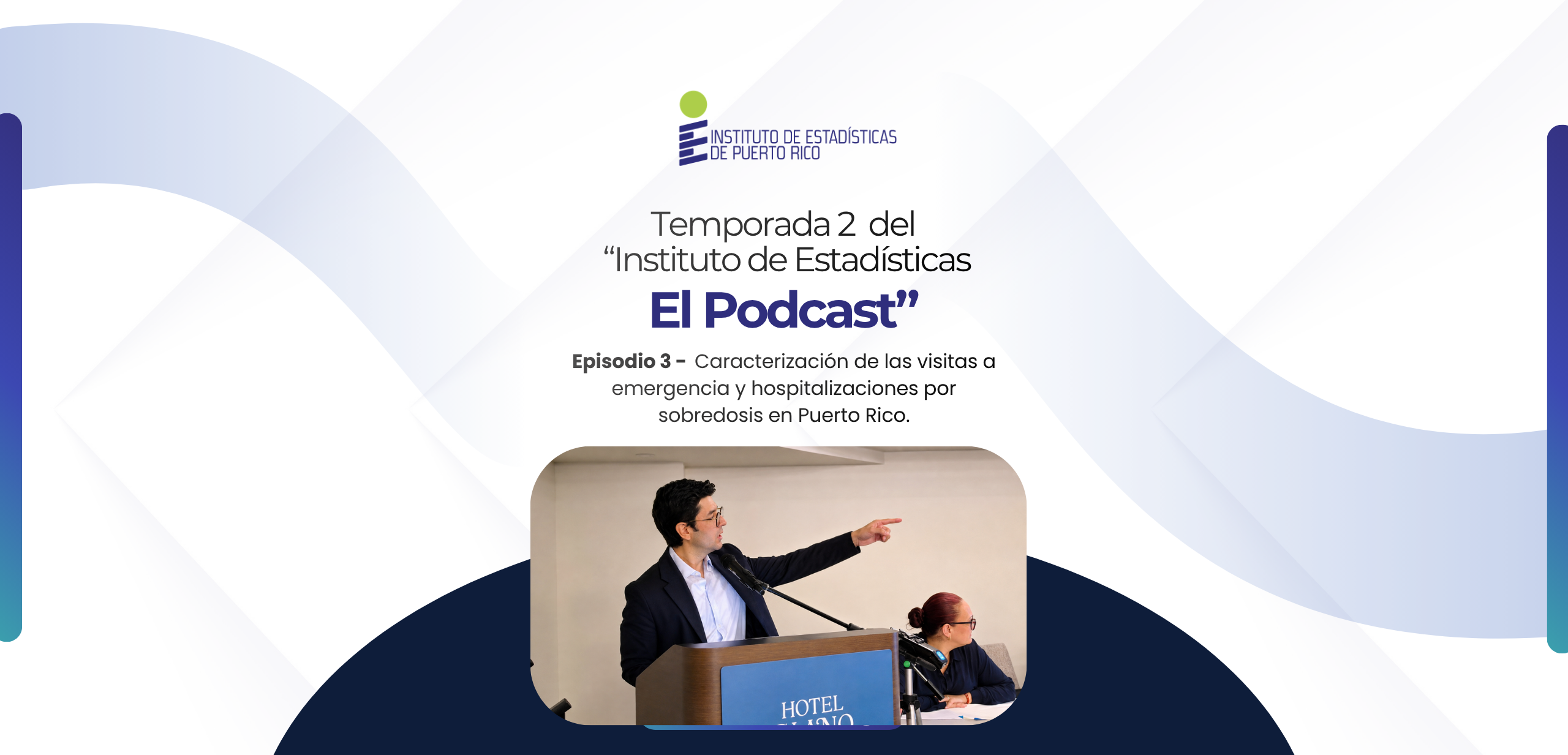
Representing the Institute were Executive Director Dr. Orville Disdier and Deputy Executive Director Dr. Idania Rodríguez. Representing the American Red Cross Puerto Rico Chapter were Regional Executive Lee Vanessa Feliciano and Regional Disaster Officer Joseph Guzmán.

Share this article:

Please let us know your satisfaction level with our services.

Visit our Official Activities, and participate with us

Visit our Calls for applications and be part of the new opportunities we have for you.

If you have any questions or just want to contact us, visit the Contact Us section.

We are at your disposal. If you need custom statistics, do not hesitate to contact us.

Sign up for our online workshops. Connect with the experts and discover the power of data!

Visit our Blog and keep up to date with the latest news and topics of interest.

Visit our Press Releases and stay connected to the Institute.

Explore the Publication Calendar and keep up to date with Puerto Rico's statistics.

Complete the form for the selection of our Statistics Coordination Committee

Suscribe to receive news directly to your email.

Listen to the Official PRIS podcast and stay informed with the experts

Podcast “Let's Talk About Business”

In the podcast Let's Talk About Business, Dr. Orville Disdier, executive director of the Puerto Rico Institute of Statistics, together with Dr. Ronald Hernández, manager of statistical projects, addressed various topics about the role of statistics in making informed decisions.

Among these issues, they highlighted one of the most debated — and often misinterpreted — concepts, inequality.

In a simple way, they describe it as the distance between those who have greater and lower purchasing power within a society. The larger that gap, the greater the inequality. In the case of Puerto Rico, they pointed out that, although not all people live in poverty, there is a significant difference between the extremes. Even if the group with the highest purchasing power is small, its impact on measurement is large due to this marked difference.

Why does it matter to understand this?

Because inequality is not just an economic fact. It is linked to social factors such as access to education, opportunities and even social tensions that can arise when the gaps are very wide.

In addition, the doctors emphasized that correctly interpreting these data makes it possible to better evaluate initiatives—such as economic aid or public policies—that seek to reduce this gap.

In short:

Understanding inequality is key to making informed decisions and building a more equitable society. We share the interview for the benefit of all and so that they can expand on these and other topics.

Access the interview: https://open.spotify.com/episode/5WDAUhFpJY9PKoQFoLmPV1?si=CtZVKuCKRMSg0h793ZbeGQ&pi=-e_fQ8PaS9WJi&t=17

Nueva calculadora de costo de vida

El Instituto de Estadísticas de Puerto Rico presenta la nueva versión de la Calculadora del Índice de Costo de Vida (COLI), una herramienta interactiva diseñada para facilitar la comparación del costo de vida entre el Metropolitan Statistical Area (MSA) de San Juan–Bayamón–Caguas y aproximadamente 300 áreas urbanas de los Estados Unidos. La nueva versión incorpora una interfaz más moderna e intuitiva, mejorando la experiencia del usuario y facilitando el análisis de las diferencias en el costo de vida entre distintas regiones.

Esta nueva versión integra los datos publicados en el Informe del Índice de Costo de Vida correspondiente al primer trimestre de 2026, permitiendo a los usuarios realizar comparaciones utilizando la información oficial más reciente disponible para el área metropolitana de San Juan–Bayamón–Caguas y las demás áreas participantes del informe.

La calculadora permite comparar el costo de vida entre diferentes Metropolitan Statistical Areas (MSA), una clasificación geográfica oficial utilizada por las agencias estadísticas federales de los Estados Unidos. Las MSA están compuestas por un área urbana con una población de al menos 50,000 habitantes, junto con las áreas limítrofes que mantienen un alto grado de integración económica y social, principalmente medida mediante los patrones de desplazamiento al trabajo.

Desde el año 2015, el Instituto de Estadísticas de Puerto Rico produce el Índice de Costo de Vida (COLI) para el MSA de San Juan–Bayamón–Caguas, convirtiéndose en la fuente oficial de estas estadísticas para Puerto Rico. La publicación trimestral del informe permite que Puerto Rico forme parte de una red de aproximadamente 300 áreas urbanas de los Estados Unidos, haciendo posible realizar comparaciones metodológicamente consistentes del costo de vida entre Puerto Rico y otras jurisdicciones.

La calculadora permite comparar tanto el índice compuesto como las principales categorías, incluyendo vivienda, alimentos, transportación, cuidado de la salud, servicios públicos y bienes y servicios misceláneos. Asimismo, permite estimar el ingreso equivalente necesario para mantener un nivel de vida similar al mudarse entre distintas áreas metropolitanas, convirtiéndose en una herramienta de utilidad para ciudadanos, empresas, investigadores, universidades y agencias gubernamentales que requieren información confiable para la toma de decisiones.

Con esta nueva versión, desde el Instituto reafirmamos el compromiso con el desarrollo de herramientas innovadoras que acerquen las estadísticas oficiales a la ciudadanía y promuevan un mayor acceso a información económica de calidad. Invitamos a los usuarios a consultar el más reciente Informe del Índice de Costo de Vida y a utilizar la nueva calculadora para conocer cómo se compara el costo de vida del área metropolitana de San Juan–Bayamón–Caguas con el de aproximadamente 300 áreas metropolitanas de los Estados Unidos.

Enlaces de interés:

Nueva calculadora del Índice de Costo de Vida (COLI)

Informe trimestre 1 2026 del Índice de Costo de Vida (COLI)

Puerto Rico Interoperability & Digital Health Summit 2026

Dr. Idania R. Rodriguez Ayuso, Executive Deputy Director of the Puerto Rico Institute of Statistics, delivered the inaugural presentation at the Puerto Rico Interoperability & Digital Health Summit 2026.

This important event was organized by the Puerto Rico Primary Healthcare Association. Dr. Rodriguez presented on "Building a Data Driven Health System for Puerto Rico."

The event was attended by staff from Puerto Rico's 330 Centers, the U.S. Virgin Islands, and federal government personnel.